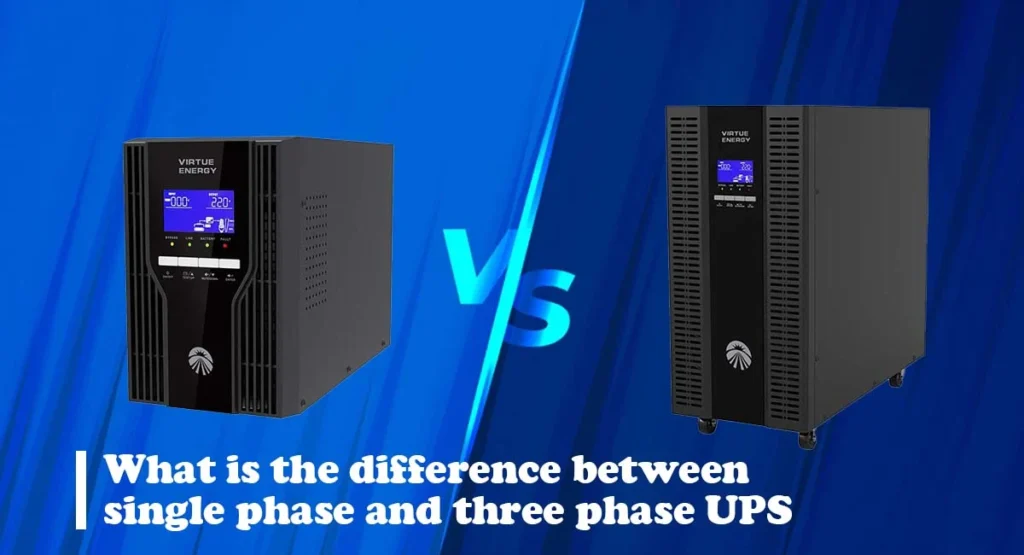
As a professional lithium UPS manufacturer in China, we provide single-phase and three-phase UPS systems for users in data centers, transportation, healthcare, manufacturing, and other industries. But what exactly is the difference between these two types of uninterruptible power supplies? In this article, we will explain the difference between single phase and three phase UPS.
What is single phase and three phase UPS?
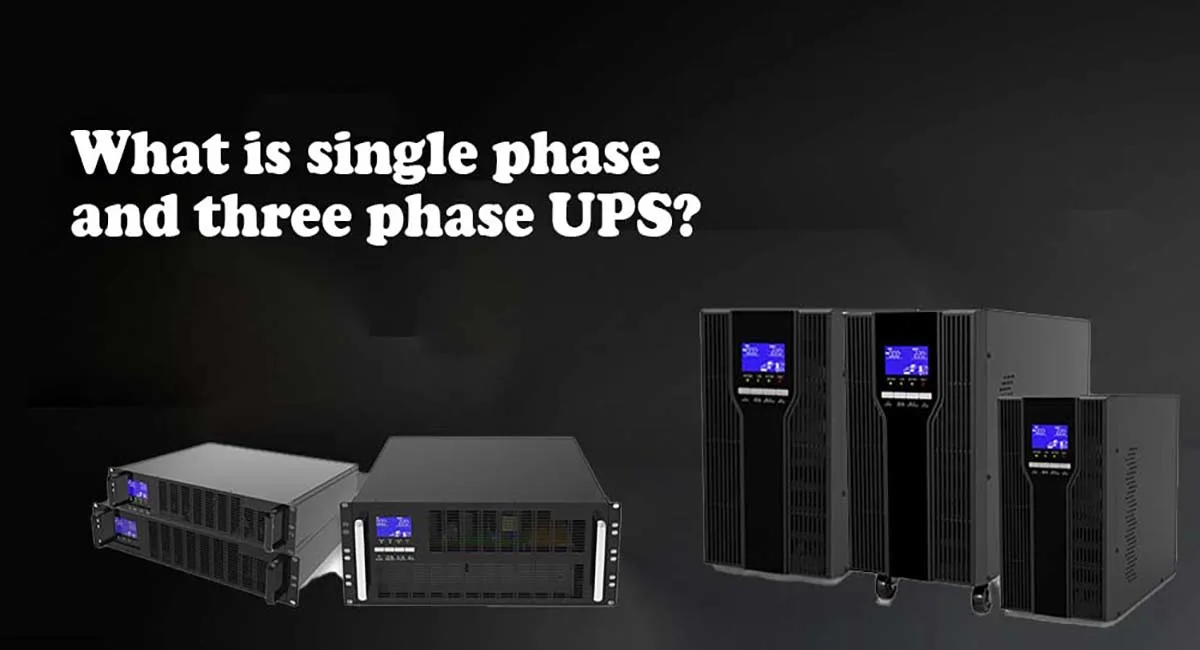
Single phase UPS is a power supply system designed to ensure the equipment which uses single-phase electrical power. Its power capacity is typically less than 20kVA. Like Virtue 1kVA 2kVA 3kVA rack mount UPS. It is primarily designed for relatively low-power devices like desktop computers, home theaters, and small medical equipment. Because its relatively small power capacity, it features a compact size. On the other hand, three-phase UPS can accept and output stable, clean three phase AC power, with capacities reaching up to 600kVA. This means it can power large-scale server centers, automated production plants, and building equipment, ensuring business continuity.
What's the difference between single phase and three phase UPS?
- Application scenarios: The primary difference between single phase and three phase UPS is the application scenarios. Single phase UPS units are commonly used for low-power equipment in homes, offices, and similar settings. Three phase UPS systems are specifically designed for high-load environments such as data centers and manufacturing plants.
- Compatible devices: Three phase lithium UPS is not only compatible with three phase equipment but also with single phase equipment. Whereas single phase UPS can only connect to single phase equipment.
- Scalability: In comparing single phase vs 3 phase, three phase UPS power supply can scale their power capacity and backup duration to accommodate future business growth, ensuring efficient and stable power system operation. However, single phase lithium UPS offer relatively limited scalability and can only support loads within a specific range.
Key factors to consider when choosing single phase and three phase UPS
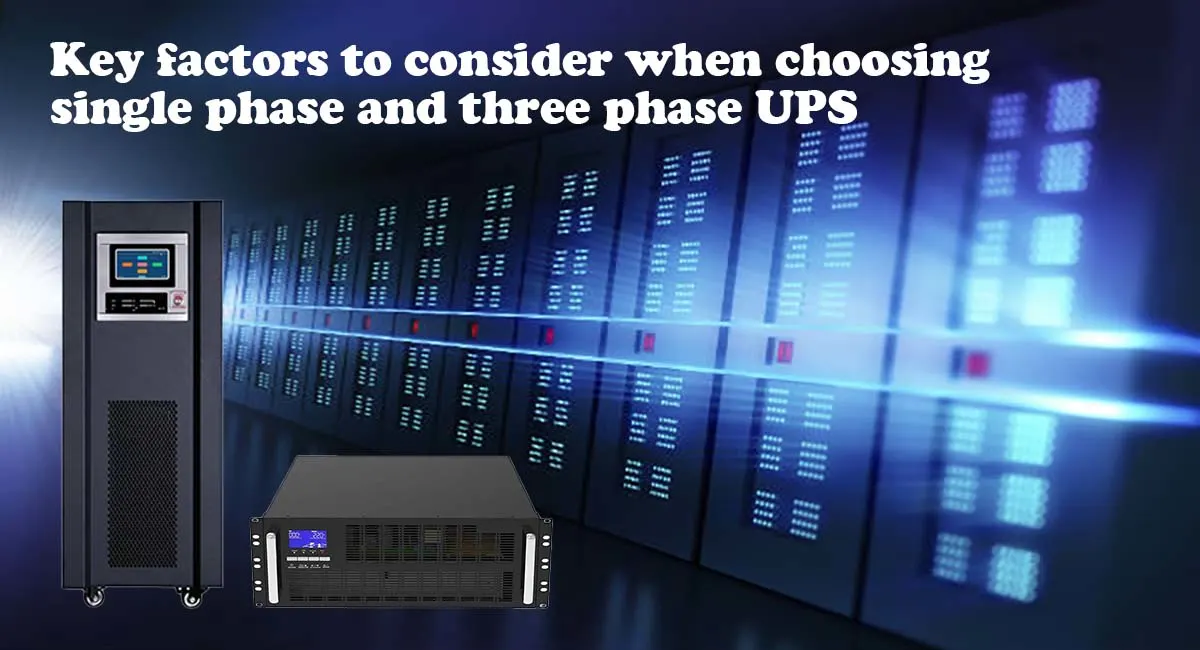
If you’re wondering single phase vs three phase which is best for your business, you need to consider the total power consumption of your equipment. If the power load requiring uninterruptible power supply exceeds 20kVA, the three phase UPS is better. On the other hand, if the total power of your equipment is below 10kVA and you have no future expansion needs, you can choose our 6kVA 8kVA 10kVA UPS. It can offer plug-and-play functionality and simple maintenance, making it an extremely cost-effective choice.
And three phase UPS has higher stability, ensuring your production lines, servers, and other core operations run continuously and reliably. When selecting lithium UPS, also need to consider whether business expansion will be required in the future. Single phase UPS is compact and flexible to deploy, but its load capacity is limited. If you want to expand capacity, you need to purchase a new UPS. And three phase UPS can be expanded online by adding power modules.
Is it better to have 3-phase UPS or single-phase UPS?
It is important to select a lithium UPS based on your specific application requirements. you should consider the total power consumption of your equipment, any subsequent expansion needs for your operations, and available installation space. If your uninterruptible power supply needs to handle loads exceeding 20kVA, three phase UPS would be a more suitable. Additionally, the quickest way to obtain professional advice is to contact us directly. We have extensive experience with lithium UPS cases, can provide tailored solutions based on your actual project requirements.
Conclusion
We hope that understanding difference between single phase and three phase UPS will help you select the optimal lithium UPS for your critical equipment. Whether you require single phase or three phase UPS solutions, we can provide it for you. Furthermore, we can offer customization based on your specific application to ensure your equipment operates stably and continuously.