Will LiFeMnPO4 batteries used in lithium UPS?
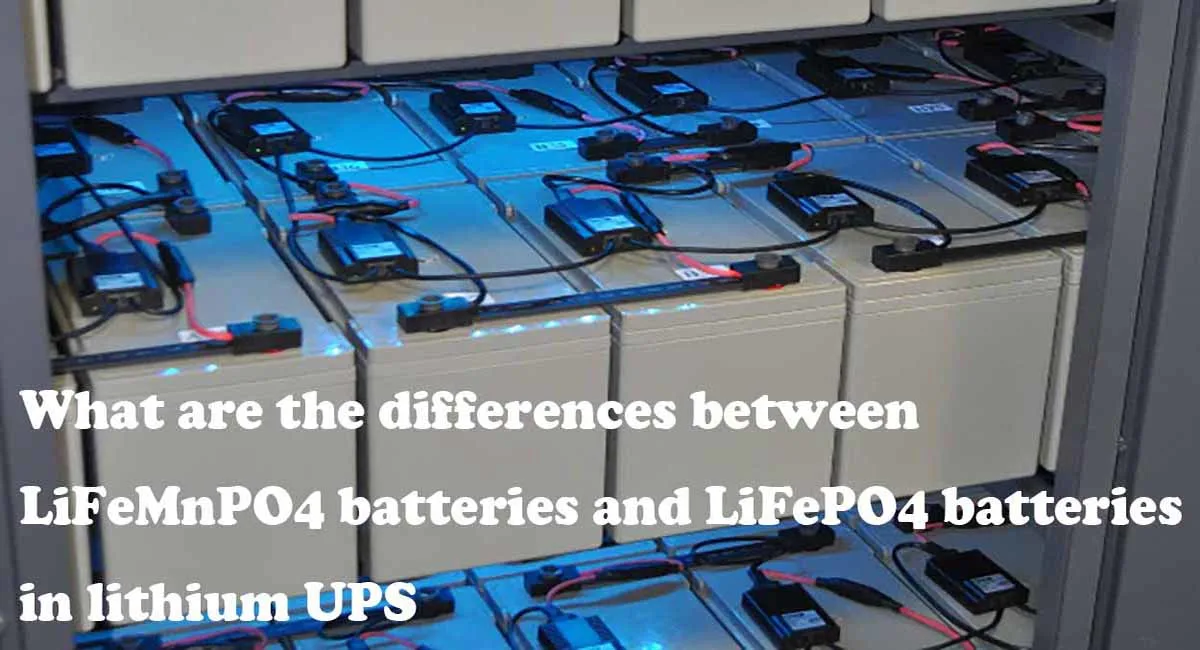
Recently, BYD launched its second-generation blade battery. The core innovation of BYD’s second-generation blade battery lies in upgrading the cathode material from lithium iron phosphate (LFP) to lithium manganese iron phosphate (LMFP). It is paired with silicon-carbon anode, which enhances battery performance. For data centers, edge computing nodes, and critical industrial equipment that rely on lithium UPS systems, this UPS battery upgrade will drive new technological advancements. In this article, we will analyze the differences between LiFeMnPO4 batteries and LiFePO4 batteries in lithium UPS applications.
Because of the high safety and long lifespan of lithium iron phosphate batteries, the top 10 UPS manufacturers in the world will choose them as the first choice for UPS backup power. With the demand for enhanced performance in uninterruptible power supply systems, LiFeMnPO4 batteries can overcome issues such as performance degradation at low temperatures experienced in LiFePO4 UPS systems. By introducing manganese into the olivine structure of lithium iron phosphate, LiFeMnPO4 can achieve breakthroughs in key performance metrics while maintaining the inherent safety profile.
How does LiFeMnPO4 enhance the performance of lithium UPS systems?
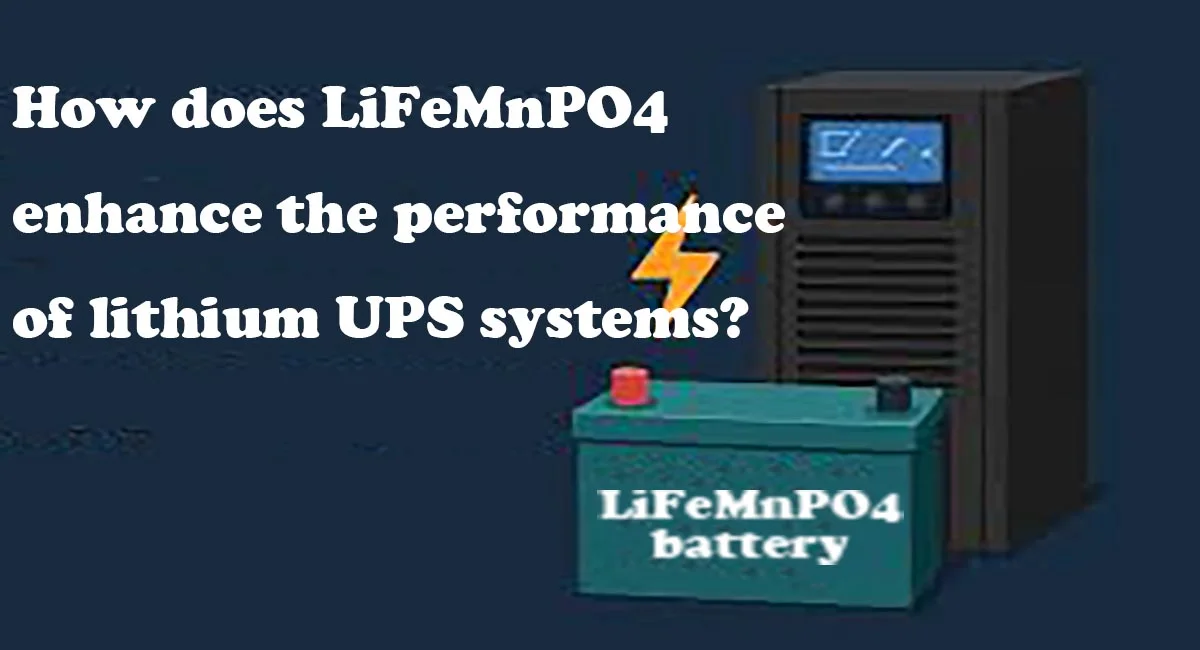
Compared to lithium iron phosphate (LFP) batteries, lithium manganese iron phosphate UPS can achieve significant technological breakthroughs across multiple core dimensions. First, in core materials, the introduction of manganese effectively elevates the battery’s voltage platform, laying the foundation for performance upgrades at the material level. The most tangible manifestation of this material innovation is increased energy density. This means that within the same volume, LiFeMnPO4 batteries can store more electrical energy, providing robust support for extended runtime of your critical equipment.
LiFeMnPO4 batteries have effectively addressed the issue of performance degradation in low-temperature environments. At -20°C, its capacity retention rate exceeds 85%. This capability can significantly enhance the battery’s low-temperature discharge performance, ensuring the reliability of lithium UPS systems in frigid conditions. In terms of cycle life, LFP batteries have already demonstrated outstanding performance. In simulated cycle testing for UPS applications, after 28 cycles, the capacity retention rate remained approximately 95%. Furthermore, based on a more stable material system and advanced BMS management, lithium iron manganese phosphate batteries are expected to exhibit even superior cycle life, offering greater potential in structural and voltage stability.
Finally, in terms of volumetric energy density, compared to LiFePO4 batteries, LiFeMnPO4 batteries can achieve an approximately 36% improvement. This means that at the system level, it can offer higher integration efficiency, creating significant design flexibility for miniaturizing and lightening equipment like UPS systems. So it can meet the increasingly stringent demands for compact installations. In other words, lithium iron phosphate manganese is not an entirely new battery type. It is an upgrade to the existing lithium iron phosphate technology. By incorporating manganese, it activates a higher voltage platform, directly boosting energy density. Simultaneously, material composite processes resolve challenges such as conductivity. For UPS applications, these technical parameter enhancements will better meet diverse user demands for uninterruptible power supply usage.
What are the benefits of LiFeMnPO4 batteries for lithium UPS?
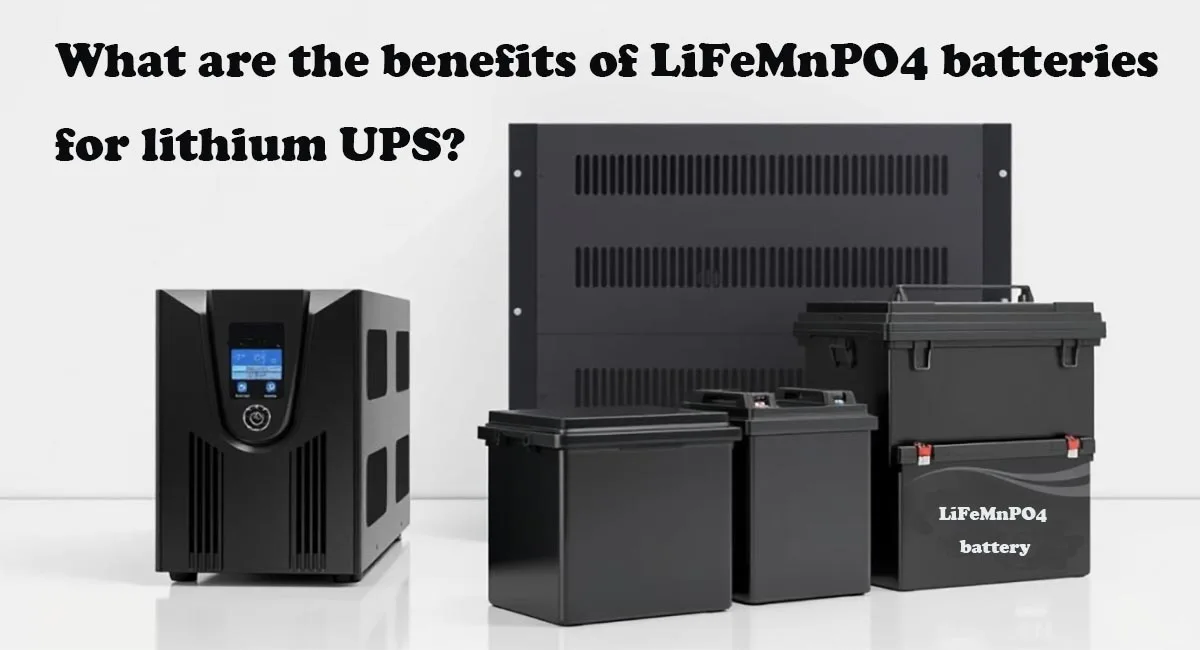
Freeing UPS installations from space constraints
Although lithium iron phosphate batteries offer significant advantages over lead-acid batteries in terms of size and weight, in urban data centers and edge server rooms where space is extremely valuable, it remains a precious resource. When paired with lithium manganese iron phosphate batteries, an uninterruptible power supply system can reduce the volume of its energy storage system by more than one-third while maintaining the same backup duration.
This means we can reclaim cabinet space originally allocated for batteries and repurpose it for core IT equipment, thereby increasing computational output per square foot. Additionally, the increase in battery energy density means lighter weight. This makes it possible to deploy high-capacity UPS systems in older buildings or retrofit projects. For edge computing nodes deployed in retail stores, clinics, and manufacturing units, smaller and lighter UPS units can be mounted on walls or installed atop racks as easily as network equipment, enabling true on-demand UPS deployment.
Possessing greater environmental adaptability
The operating temperature range for Virtue UPS is between -10 and 50 degrees Celsius. In low-temperature environments, the discharge capacity of lithium iron phosphate batteries is susceptible to temperature fluctuations. For backup rooms without precision air conditioning, outdoor cabinets, or facilities in northern high-latitude regions where there is no air conditioning during power outages, this can easily cause the uninterruptible power supply to malfunction. At -20°C, LiFeMnPO4 batteries retain over 85% of their capacity. This significantly enhances the UPS system’s environmental adaptability, ensuring stable power delivery to critical loads during critical moments even under harsh conditions without active temperature control.
Improving the charging speed of UPS batteries
In regions with frequent power grid fluctuations or multiple outages within a single day, the charging speed of UPS batteries is critical. LiFeMnPO4 material naturally exhibits superior lithium-ion conductivity. This means LiFeMnPO4 batteries support higher charging rates in UPS applications. Following a mains power interruption and battery discharge, the battery can rapidly recharge to a usable state upon power restoration. This significantly reduces preparation time before the next outage, ensuring the system remains fully charged at all times.
Reducing the frequency of UPS battery replacement
Lithium iron phosphate batteries feature outstanding cycle life performance. Through material system upgrades and optimized battery management systems (BMS), lithium manganese iron phosphate batteries can further enhance cycle life while maintaining high safety. The higher voltage platform and more stable structure of lithium manganese iron phosphate can help reduce material degradation during long-term float charging.
Currently, the lithium batteries in our rack-mounted and tower UPS systems have a design life of 8 to 10 years. With the future adoption of lithium manganese iron phosphate batteries in uninterruptible power supplies, it may become possible to operate data centers or critical facilities for a decade without requiring battery pack replacement. This not only eliminates the cost of subsequent battery replacements but also avoids the downtime, handling, wiring, and potential fire safety risks associated with battery replacement operations, elevating availability to unprecedented levels.
Conclusion
LiFeMnPO4 batteries enhance the safety and longevity of LiFePO4 batteries by introducing manganese, precisely addressing their limitations in energy density and low-temperature performance. For UPS applications, this upgrade enables seamless handling of frequent grid fluctuations while maintaining reliable backup power in harsh environments. Not only does it extend the service life of UPS batteries, but it also helps maximize space utilization in deployment scenarios.