When we use medical equipment, surveillance equipment, data rooms, and other important electronic equipment, we will equipped with an uninterruptible power supply (UPS). But do you know how does a ups work? I believe we all know that uninterruptible power supply can provide power to support the equipment keep running even when the power is cut off, to avoid equipment damage and data loss. In this post, we will explain how does a lithium UPS power supply work.
How does a UPS work?
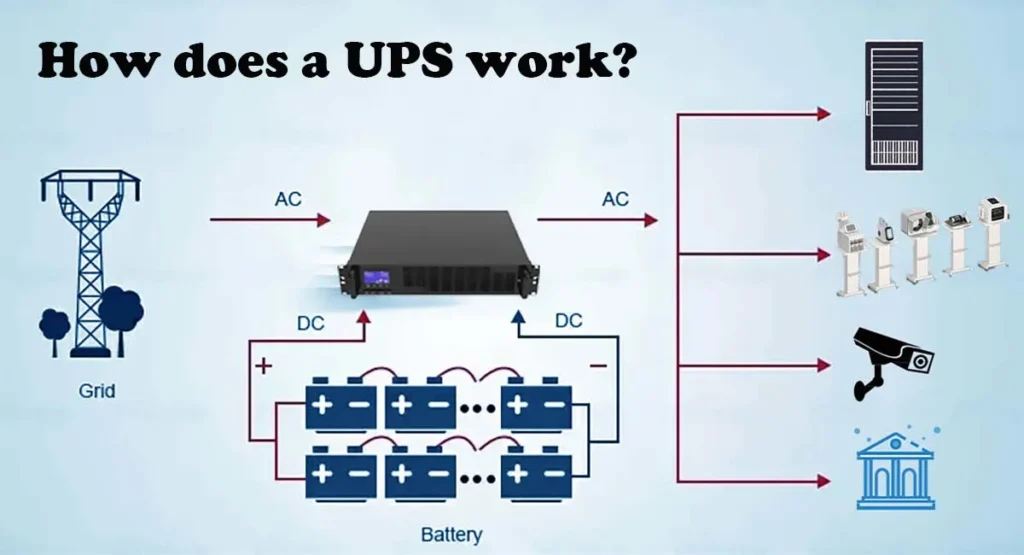
Uninterruptible power supply (UPS) is mainly used to provide continuous and stable power to critical load equipment through sophisticated power conversion technology. When the utility power input is normal, our UPS will convert the AC power output from the utility to DC power, and then convert it to AC power for the equipment. This is an example of how do uninterruptible power supplies work. Some users may think that the work of the UPS is duplicated. In fact, this step can effectively purify the power, eliminate the utility power waves and other unstable factors, to avoid the load equipment to receive damage.
How does a UPS work when power outage or fluctuations?
When the utility power is abnormal, Virtue lithium UPS can quickly recognize the power problem and switch to battery power in zero milliseconds. Furthermore, during this power switchover, the load device does not feel any power fluctuation. When power outages occur, UPS will immediately switch over to battery power to ensure that critical equipment can continue to operate. On the other hand, it provides sufficient time for us to save data and avoid data loss.
How should we do if the UPS needs to be maintained?
Bypass mode is one of the modes of how does a UPS power supply work , and it is our li-ion UPS safety redundancy design. When lithium UPS is overloaded or the internal failure is detected, it will switch to this working mode to provide continuous power output for critical loads. In addition, many users are concerned about whether the CCTV UPS and data center UPS can be maintained without interruption. In this case, you can change the lithium UPS power supply to bypass mode. It can isolate the UPS to carry out maintenance.
What are the core components of a UPS and how do they work?
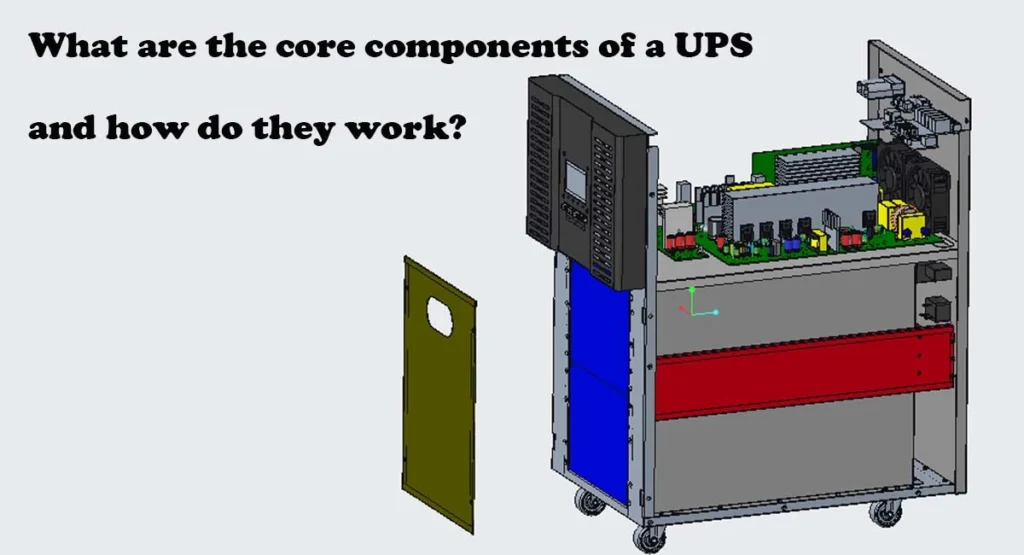
The core components of UPS are rectifier, inverter, battery, static switch, and control unit. We all know that UPS can purify the incoming utility power and offer clean power to the load while charging the LiFePO4 battery. And this purification process requires the cooperation of rectifiers and inverters. When the power goes out, the backup power we use is from the battery packs. The control unit is always monitoring the status of the UPS, if it detects any abnormality in the device, you will know it immediately through your phone or app. When the UPS fails or requires maintenance, you can use static switching to make the device directly connected to the utility power, which can ensure critical equipment properly operates.
In daily operation, the rectifier will first convert the incoming AC power into DC power. It not only provides power to the whole system, but also charges the battery packs. Most of power passing through the rectifier will go to the inverter. And the inverter will reconvert the DC power to AC power with a stable output voltage according to the voltage parameters we set. Once there is an abnormality in the lithium UPS power supply during operation, the control center can identify the power failure within 2 milliseconds and take emergency plan. At this time, our lithium battery will provide power to the load equipment in milliseconds to ensure the stable power supply. Similarly, if there is an abnormality in the UPS power supply, we can use static switch to make the utility power continuously provide power to the equipment, to make sure the business is going on.
How long will a 1kVA lithium UPS last?
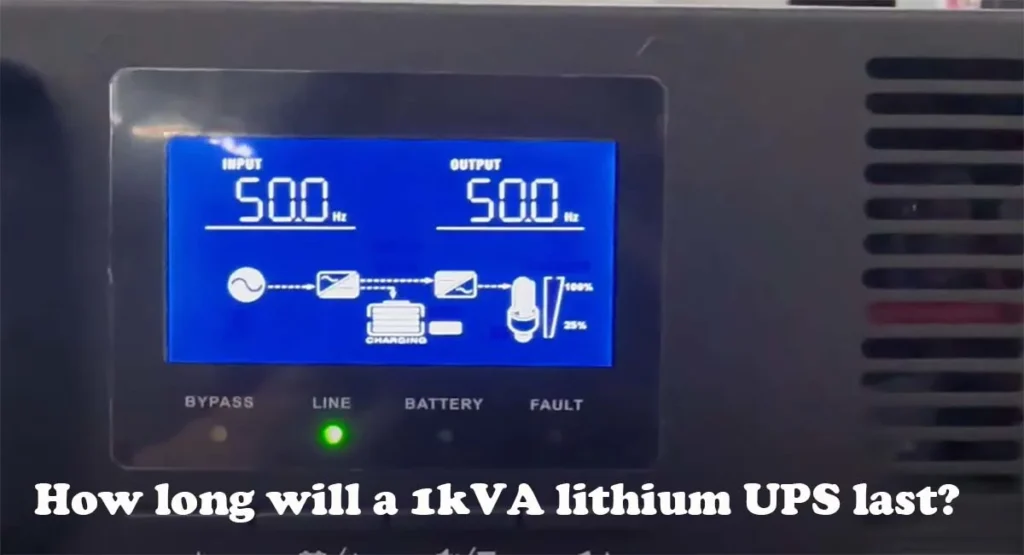
In fact, no matter if it is a 1kVA UPS, 10kVA UPS or a high power lithium UPS the duration is determined by the battery capacity and the load equipment. In fact, no matter if it is a 1kVA UPS, 10kVA UPS or a high power lithium UPS the duration is determined by the battery capacity and the load equipment. Typically, the uninterruptible power supplies we suggest to you are able to provide a backup time of half an hour to two hours with a half load. Of course, we are able to supply 5-10 minutes or more of backup time lithium UPS according to your needs.
Does UPS consume electricity when plugged in?
Yes, the UPS will generate some power consumption when it is connected to the mains, but this power consumption is necessary to maintain its normal operation. After connecting to the electricity, the internal electronic components start functioning. The control unit will monitor the status of the power all the time. And the display will show real-time data. These basic functions consume a certain amount of power. But different types of UPS consume different amounts of power. Our lithium UPS has ECO mode, which can effectively avoid power wastage while ensuring that the UPS operates properly. On the other hand, when the UPS is working, the conversion efficiency can reach 99%. We have 0.9/1.0 power factor lithium UPS for you to choose. Please feel free to contact us for more information.
Conclusion
Uninterruptible power supply (UPS) plays a key role as the core equipment of power protection, which can complete the switching between utility power and battery power supply in milliseconds through precise power conversion technology and intelligent control strategy. It provide power protection for the vital machines in various industries. How does a ups work is to eliminate all kinds of unstable factors in the power grid and ensure the normal operation of the equipment in critical places such as data centers, hospital operating rooms and financial transaction systems.