The basics of lead acid vs lithium UPS
Uninterruptible power supplies (UPS) is the guarantee for the continuous operation of critical equipment. Whether it’s servers in cloud data centers, medical equipment in operating rooms, or production lines in automated factories, none can function without a UPS. We all know that UPS systems provide temporary power during unexpected outages, ensuring business continuity. At present, most UPS products on the market are equipped with lead-acid batteries. However, in data centers, surveillance systems and other applications, some customers will chosen UPS systems with lithium batteries. In the lead acid vs lithium debate, which battery type should we choose for our UPS?
As a professional lithium UPS manufacturer, we provide replace lead acid UPS with lithium (LiFePO4) solutions for users across various industries. Before the advent of lithium UPS, lead-acid UPS systems have been the preferred uninterruptible power solution for users. Because it has lower upfront costs and relatively reliable performance. However, it is also associated with high maintenance costs during subsequent use caused by the need for frequent battery replacement. With the technology of UPS with lithium battery, the pain point of limited lifespan in traditional lead-acid UPS is solved effectively. Furthermore, it also improves energy efficiency significantly. This is why users will choose the latter in the lead acid and lithium UPS comparison.
Lead acid vs lithium which is better for UPS?
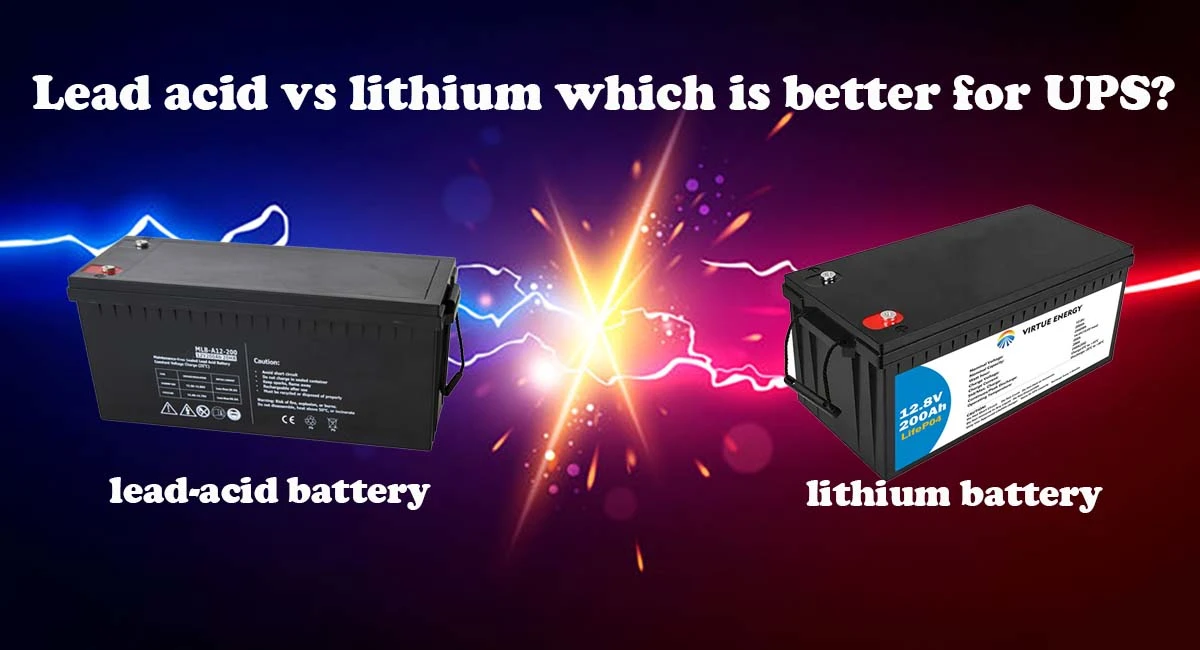
When it comes to efficiency, performance, lifespan, and maintenance, lithium has the advantage over lead acid.
- Efficiency: Lithium UPS power supply can achieve up to 99% efficiency and support fast charging. For countries that suffer from prolonged power outages, battery charging speed is critically important. Moreover, we can provide customized solutions to enhance battery charging efficiency and reduce charging time according to your specific requirements.
- Service Life: In comparing the service life of lead acid and lithium, the former typically lasts 3-5 years, while the latter can reach up to 10 years. It means that in practical applications, UPS with lead acid battery requires frequent replacements. Replacing UPS battery not only increases the project’s total cost but also extends business downtime. On the other hand, LiFePO4 UPS systems have a relatively higher initial purchase price. But when you compare the total cost over a decade, you will find that UPS base LiFePO4 battery is cheaper than lead-acid UPS system. It is because it help you avoid frequent replacing of batteries, which can save a lot of operational and maintenance costs.
- Space occupancy: For example, you can clearly distinguish between a UPS with lead acid vs lithium in an image showing both with a 3-hour backup runtime. Lead-acid batteries are bulky and heavy, while lithium batteries of the same specifications are significantly lighter. Therefore, lithium uninterruptible power supply is an ideal choice for compact data centers, servers, and similar scenarios.
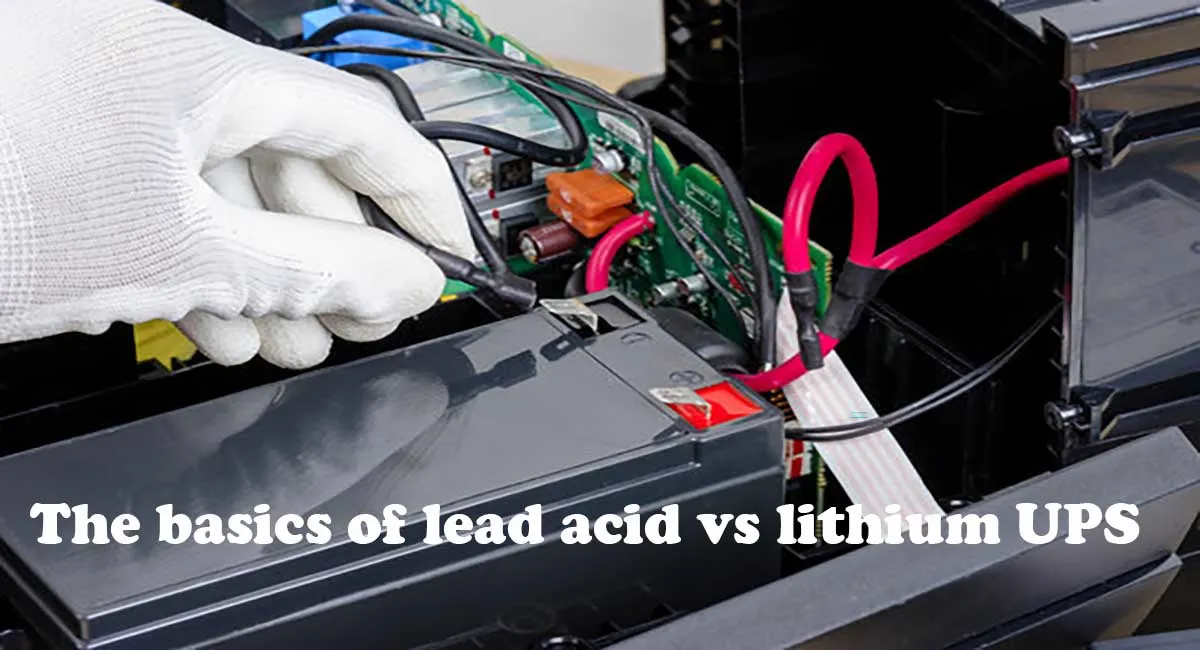
Aftercare: One of the significant advantages of lithium battery is that it requires no maintenance. In contrast, lead-acid battery need regular upkeep to ensure it can provide power to critical equipment in critical moments.
Can you replace a lead-acid battery with lithium in UPS?
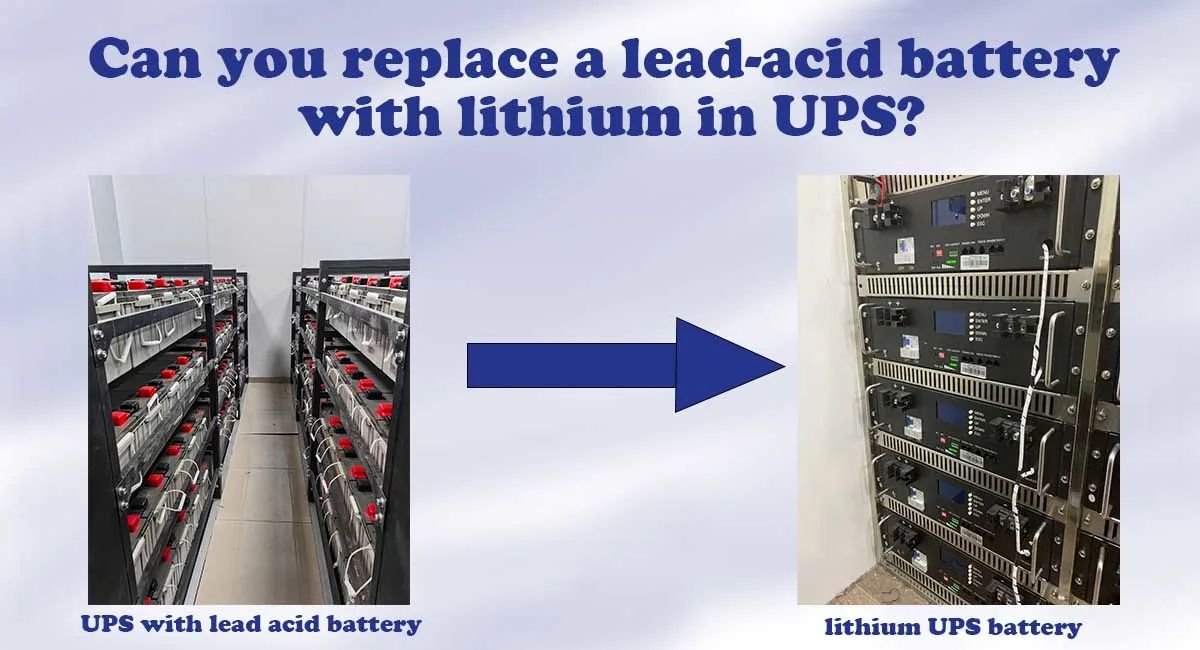
Of course, we possess extensive experience with lead acid battery alternatives for UPS. And we can provide tailored LiFePO4 UPS solutions and products to match your existing projects. If you are looking to overcome the bulky footprint, short lifespan, and frequent maintenance issues associated with traditional lead-acid UPS deployments, lithium UPS is the best choice. Both lead acid vs lithium batteries can be paired with uninterruptible power supplies to provide critical power protection for essential loads during critical moments. In comparison, lithium UPS can offer a longer service life, a smaller footprint, and higher efficiency. If you are looking for lithium UPS to replace lead-acid UPS for your project, please contact us. We will provide perfectly matched lithium UPS solutions based on your specific project requirements. Furthermore, we can also offer customized UPS solutions for your project.
Which is cheaper lead acid vs lithium battery for UPS?
In terms of upfront purchase costs, lead-acid batteries are cheaper than lithium batteries. However, when comparing total costs between lead acid vs lithium, lithium UPS cost less. After purchasing a UPS with LiFePO4 battery for your project, you won’t need to frequently replace batteries or hire personnel for battery maintenance during subsequent use. UPS with lead acid battery need to replace battery frequently. Assuming the uninterruptible power supply system is used for 10 years, you will need to replace lead-acid batteries within 2-3 years. On the other hand, if you use Virtue lithium UPS, you won’t need to replace the batteries during ten years. Furthermore, you don’t need to allocate extra space for battery storage. Because lithium UPS require minimal deployment space.
Lead acid vs lithium which should I select for UPS?
When selecting a UPS for critical equipment, many customers will consider the choice between lead acid vs lithium. Is a lead-acid UPS better, or is a lithium UPS better? If your budget is limited or the project timeline is short, lead-acid UPS with low upfront costs is a suitable option. For long-term use or if you want to minimize system maintenance, lithium UPS is the best choice. Not only can reduce operational expenses and save on total costs, but can also free up valuable space with the smaller footprint. Of course, you can also contact us for the optimal uninterruptible power supply solution.
Conclusion
On the market, uninterruptible power supplies (UPS) typically equipped with either lead acid vs lithium batteries. With the increasing adoption of lithium UPS, there are more and more users selecting UPS with lithium batteries for their power protection systems. In the comparison between lead acid vs lithium UPS power supply, lithium UPS is able to provide superior performance and a longer service life. And it can meet the needs of projects with limited deployment space. Whether you’re looking for an alternative to lead-acid UPS solutions or seeking a uninterruptible power supply (UPS) base lithium iron phosphate (LiFePO4) battery for your project, we can provide expert advice and services to help you make the best choice for your project.