All industries are demanding increasingly stringent reliability and continuity in power supply, particularly the industry related to the digital economy. And uninterruptible power supplies (UPS) have deeply penetrated the power protection systems for critical equipment in various industries. When utility power suddenly interrupted, UPS backup time is not a technical parameter anymore, but the precise duration during which users’ core operations can continue running. Therefore, when users deploy UPS systems in data centers, servers, and other application scenarios, they would like to increase the number and scale of lithium batteries. How to scientifically and accurately choose the capacity of lithium iron phosphate batteries for UPS power supply to meet the needs of specific loads and backup time is directly related to system reliability, business continuity, and the investment cost.
What is UPS backup time?
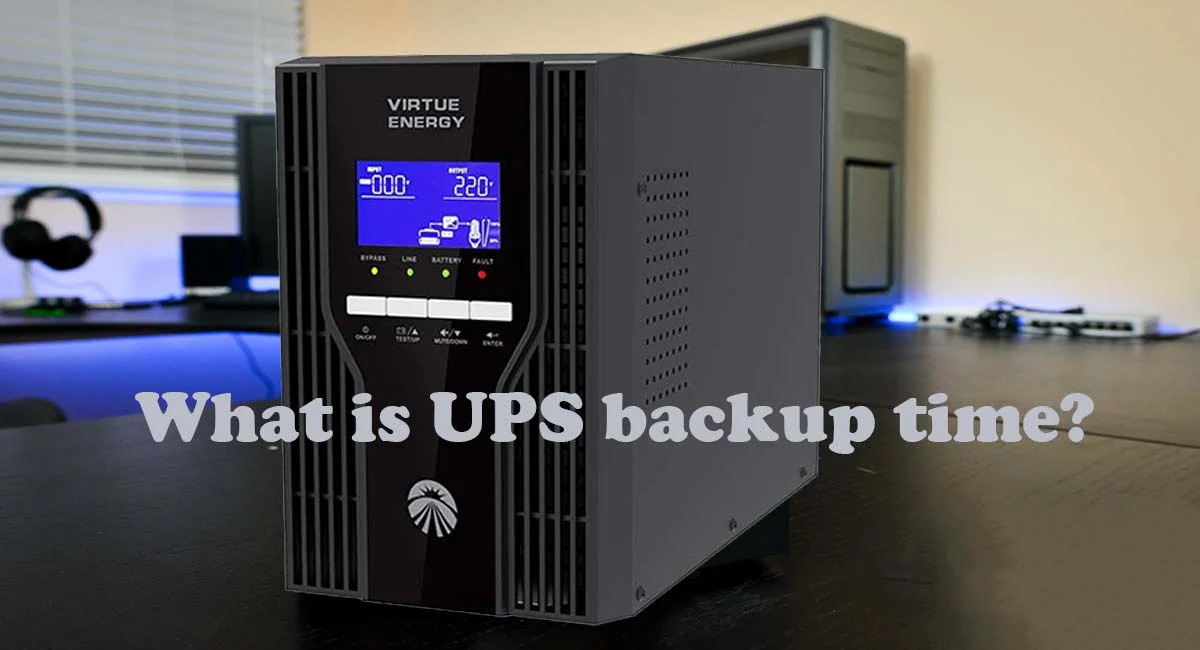
When mains power fails, the time that a UPS relies on its built-in battery or external lithium battery to continuously supply power to connected devices is called UPS backup time. This time also means how long your critical equipment can operate normally during a power outage. And you can find the backup time for each lithium UPS in its specification sheet. Our 1kVA online UPS is capable of supplying 120 minutes backup time in half-load. However, when using the Lithium UPS in actual operation, some users may notice there is a discrepancy between actual lithium UPS backup time and the value specified in the technical documentation. This is because the run time depends on the power consumption of the connected load, the capacity of the configured batteries, and the operating environment.
How long is 2kVA UPS backup time?
The Virtue 2kVA lithium UPS features a built-in lithium iron phosphate battery with a capacity of 1000Wh, which is capable of providing 60 minutes of backup runtime under a 50% load. The UPS backup time will be affected by the actual load and the ambient temperature of the application environment. If you need sufficient time for your computer equipment to save data and shut down safely, 10-15 minutes backup time is generally sufficient. If you require longer backup time, please contact us and we will customize the backup time to meet your specific needs.
How to calculate UPS backup time?
If you want to obtain the most accurate UPS backup time, you can check the specifications on the UPS manufacturer website. In the lithium UPS product pages have different lithium UPS models, you’ll find specification sheets detailing the capacity of the UPS built-in battery and the backup time it can provide under different load conditions. Alternatively, you can calculate it by yourself. If you know the battery voltage, capacity, and total power consumption of the connected electronic devices, you can calculate it using the following formula: [Battery Voltage (V) × Battery Capacity (Ah) × Efficiency × Depth of Discharge] ÷ Load Power (W) = Backup Time (hours). You can also search online for tools that calculate UPS backup time. It is also possible to contact us to obtain the specific backup time for a lithium UPS.
What factors will affect lithium UPS backup time?
UPS conversion efficiency
During AC-DC conversion, UPS systems will consume a certain amount of energy. But Virtue online UPS efficiency ranges between 96% and 99%, which means the battery power can be more fully utilized to running the load equipment. Therefore, you need not worry whether our lithium UPS consumes excessive power during current conversion to reduce your UPS runtime.
Load power of equipment
The total power of electronic devices connected to the lithium uninterruptible power supply (UPS) is one of the key factors affecting backup time. The higher the total power of the system load, the time it can provide will be shorter. For example, a 1kVA lithium UPS is able to provide two hours of backup time. When 100% loaded, it may only provide about 10 minutes of backup time. Therefore, the precise backup time of an uninterruptible power supply must be calculated based on the actual load power.
Battery capacity
With the same load, the larger the battery capacity of the UPS, the longer the backup time it can provide. Conversely, if your battery capacity is small, the backup time of the lithium UPS will be short. Therefore, in addition to offering UPS units with built-in lithium iron phosphate batteries, we also provide UPS products that support external batteries. You can configure the battery capacity based on your required runtime to ensure your business operations can continue for an extended period.
Actual operating temperature
In the actual operating environment, the operating temperature may have an effect on the uninterruptible power supply backup time. For instance, in high-temperature environments, batteries will easily age prematurely due to excessive heat, which will result in a reduction in the amount of power they can deliver. Therefore, to avoid the impact of ambient temperature on lithium battery runtime, you can tell us the actual environmental conditions where the equipment will be used. Based on the information you provide, we will offer a more suitable uninterruptible power supply solution to ensure your critical equipment continues to operate during unexpected power outages.
Degree of equipment aging
The aging of UPS units and batteries will affect the efficiency of the entire power protection system. If your equipment is equipped with lead-acid uninterruptible power supplies, you will need to replace the lead-acid batteries with new ones after 2-3 years. In contrast, our lithium UPS batteries have an expected lifespan of up to ten years. It not only significantly reduces your battery replacement costs but also minimizes the frequency of business interruptions for maintenance. Therefore, if you are looking for a solution to replace your lead-acid UPS, please feel free to contact us.
How do I increase UPS backup time?
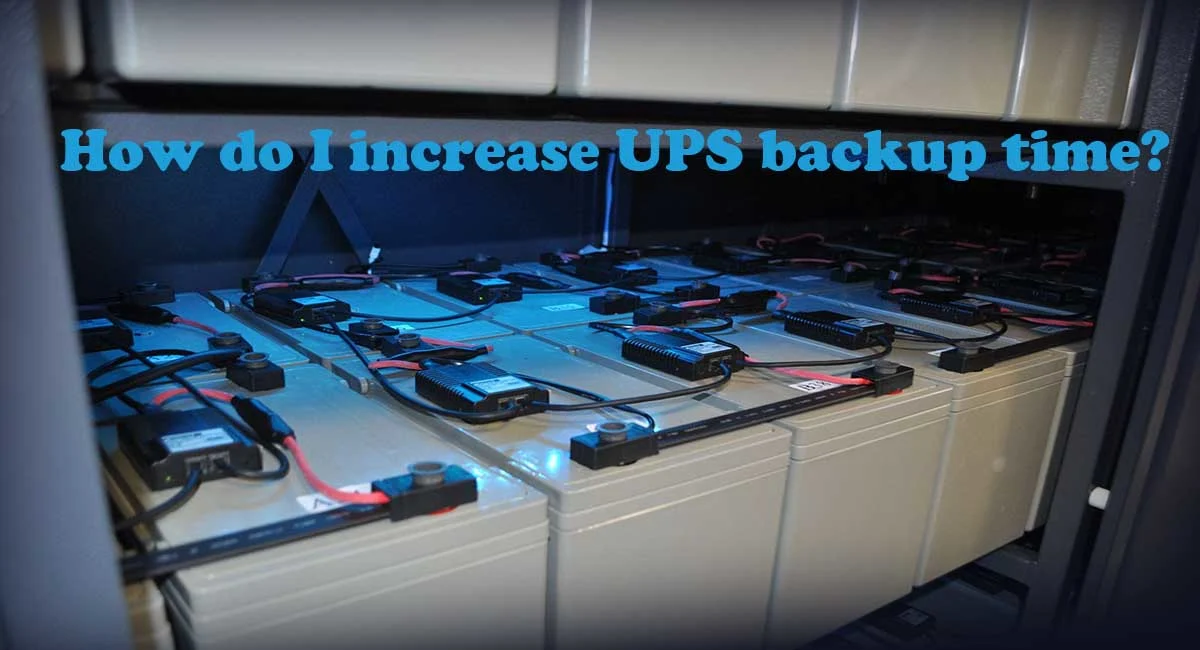
With the increase in business operations, various industries are experiencing a growing demand for electricity. And the UPS backup time is directly related to the duration of our business continuity. If the uninterruptible power supply run time decreases due to equipment aging, you can contact professional technicians to replace the original components or install a new UPS power supply. When we have new requirements for the backup time of existing UPS systems, we can expand the battery capacity. Optimizing the load is also an cost effective solution. You can extend backup time by optimizing the number of load devices or adding UPS units. When we have new requirements for the backup time of existing UPS systems, we can expand the battery capacity. Optimizing the load is also an cost effective solution. You can extend backup time by optimizing the number of load devices or adding UPS units. Additionally, when purchasing the system initially, you can discuss with us your anticipated future business growth and desired backup time. We can customize the system based on your actual needs, ensuring sufficient load capacity and backup time for your future business expansion.
Conclusion
UPS backup time is a value influenced by multiple factors. Factors such as the capacity of lithium iron phosphate batteries, the power of the equipment load, and ambient temperature will affect the actual backup time of Virtue lithium UPS systems. In practical applications, precise load calculations, regular battery maintenance, suitable operating environments, and scientific capacity expansion planning can help ensure critical equipment can get sufficient lithium UPS runtime to operate. Whether for IT, data centers, or enterprises, the right uninterruptible power supply solution not only provides more accurate backup time predictions for your projects but also allows you to adjust power protection to the needs of your growing business. Feel free to contact us to get the lithium UPS solution to match your application, ensuring your uninterruptible power supply delivers the expected power support for your business at critical moments.