Whether in a data center or our everyday home office, the uninterruptible power supplies (UPS) we use are equipped with batteries. Examples include plug-and-play 1kVA tower UPS, UPS integrated with air conditioning, servers, and other equipment. Batteries can ensure load equipment has enough power to save critical data and shut down properly even during a power outage. The main UPS battery types currently available on the market are lead-acid batteries and lithium batteries. When faced with a choice between different UPS battery types, how do you know which one is best suited for your project?
What is UPS battery types?
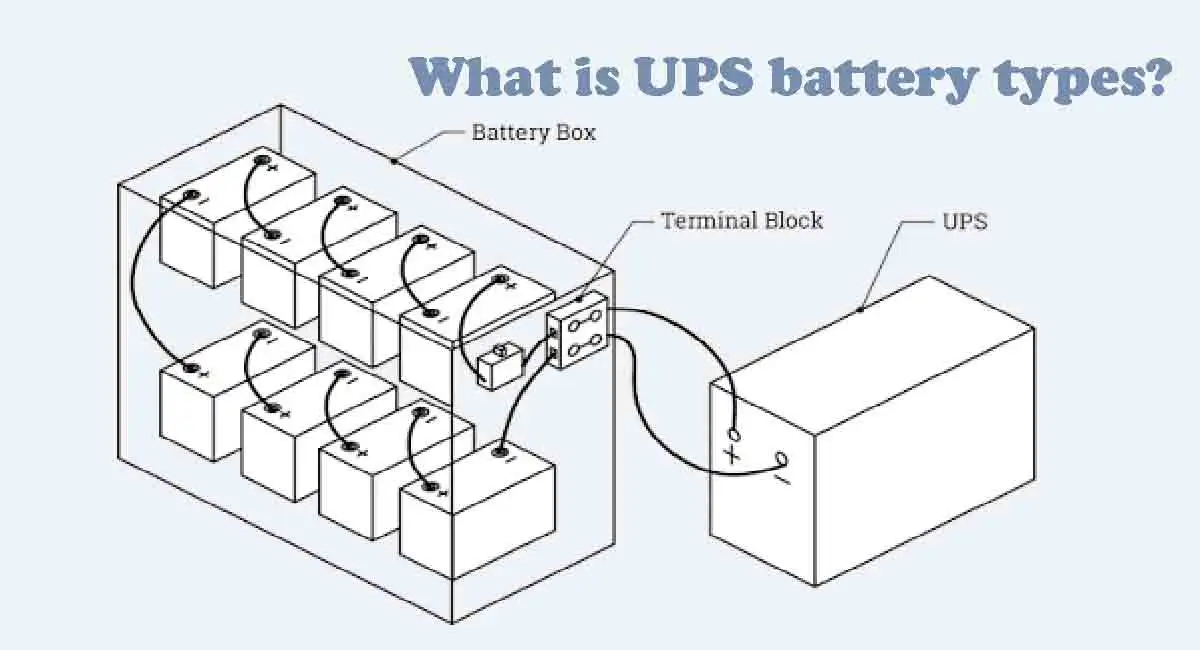
UPS battery types represent the types of batteries used in uninterruptible power supply systems. The UPS battery is one of the key components of UPS. Once the mains power is interrupted, the UPS battery will provide power to support the load equipment to continue operating, avoiding business interruptions. After the mains power is restored, the UPS will filter impurities from the mains power to provide clean power to the load equipment. At the same time, it will recharge the battery. At present, common UPS battery types are lead-acid batteries and lithium batteries. Different UPS battery types have their own cycle life, environmental adaptability, and costs.
How many UPS battery types are there?
Lead-Acid Battery
According to current market statistics, in UPS battery types, lead-acid batteries occupy over 90% market share. Lead-acid UPS batteries include pure lead batteries, VRLA batteries and VLA batteries. Among these, VRLA batteries are currently the most widely used type of lead-acid UPS battery owing to its low cost and maintenance-free feature. However, their service life is only 3 to 5 years. And they are sensitive to temperature. They generally work well in standard server room environments. VLA batteries have a relatively longer service life, but they require scheduled water maintenance and must be housed in a dedicated ventilation room.
Lithium Battery
Compared to lead-acid batteries, lithium batteries are superior in lifespan, size, weight and charging speed. Lithium batteries now rapidly increasing their market share among UPS battery types. More and more users are choosing lithium UPS for data centers and financial trading facilities. In addition, many users have inquired us the solution to replace existing lead-acid batteries with lithium batteries. Virtue Energy can provide lithium UPS systems as well as solutions for replacing lead-acid batteries with LiFePO4. If you would like to equip your project with lithium UPS, please feel free to contact us for a detailed solution. Furthermore, our lithium batteries are LiFePO4 batteries, which are known for their long service life and exceptional stability, widely regarded as the safest and most reliable battery choice among UPS battery types.
Nickel-Based Battery
Nickel-based batteries used in UPS systems include nickel-zinc and nickel-cadmium batteries. Nickel-zinc batteries do not catch fire or explode and can effectively handle high-frequency, high-current surges. This makes them widely used in computing applications such as AI and data centers. And Nickel-cadmium batteries feature exceptionally high reliability and environmental adaptability. They can operate under extreme temperatures ranging from -50°C to +70°C. They also can withstand harsh environments, such as areas with high vibration. So Nickel-cadmium batteries are frequently used in industrial, rail transportation, and power system applications.
Which is the best UPS battery type?
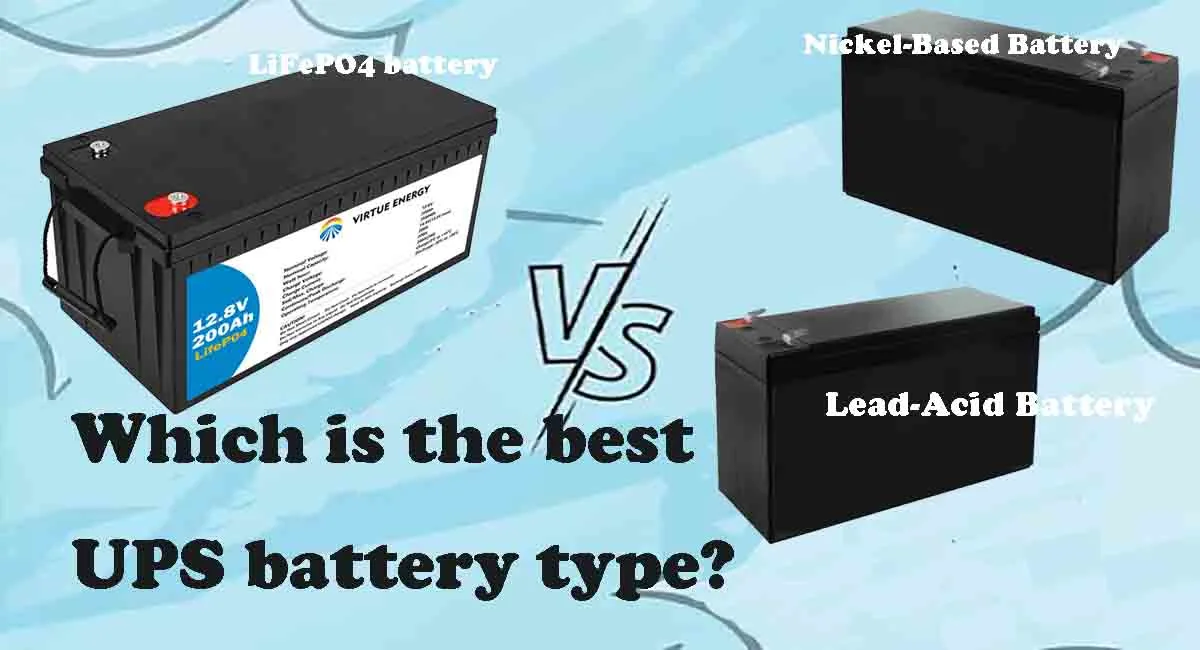
Although there are many UPS battery types we can choose, each type has its own advantages and is suited for different applications. This means we should select the appropriate battery based on the specific application and requirements. As a lithium UPS manufacturer, we highly recommend choosing LiFePO4 batteries. On the one hand, its design life is as long as 10 years. This means you do not need to replace the batteries frequently, which helps reduce replacement costs.
On the other hand, in applications such as large data centers and trading centers, there is a need for extended UPS backup time. For the same capacity, LiFePO4 batteries are smaller and lighter than lead-acid batteries. In other words, LiFePO4 batteries can save valuable space in these critical applications. Although the initial purchase cost of LiFePO4 batteries is higher than lead-acid batteries at deployment, their total cost is lower when factoring in their service life. Of course, if you have a limited budget and do not have excessive requirements for UPS batteries, lead-acid batteries can fully meet your project’s UPS battery needs.
How to choose the suitable one in UPS battery types?

Users may be more familiar with lead-acid batteries when it comes to UPS battery types, but if you are looking for high value for money and want to avoid frequent maintenance, we recommend you choosing UPS equipped with LiFePO4 battery. From lifespan, stability, size, and environmental adaptability, LiFePO4 batteries are more advantageous than lead-acid batteries. Furthermore, in specific application scenarios, lithium batteries can provide superior voltage regulation, and the overall efficiency of the UPS is higher than the UPS equipped with lead-acid or nickel-based batteries.
On the other hand, if your project has a limited budget and the application environment is standard, VRLA batteries can also meet your needs sufficiently. If you have limited space but require a long backup time, LiFePO4 batteries would be a better choice. In computing-intensive applications, power fluctuations tend to be significant. If you re looking to select a UPS battery for this type of application, you could consider nickel-zinc batteries. The high power density and safety of nickel-zinc batteries make them well-suited to handle the power fluctuations of computing equipment. If you need a custom UPS battery for your project, please don’t hesitate to contact us. We will select the most suitable UPS battery type for you based on your specific application and requirements, and we can also provide you with a customized solution.
Can I change the battery type for my UPS?
We recommend that you contact us for further consultation about solutions for replacing UPS battery types. When replacing UPS battery types, it is important to comprehensively consider differences in battery voltage, charge and discharge currents, communication protocols, and other factors. We have extensive experience with successful replacements from lead-acid to lithium batteries. If you are interested in upgrading your current UPS from lead-acid batteries to LiFePO₄ batteries, please feel free to contact us to learn more about our customized solutions for replacing lead-acid UPS batteries tailored to your specific project.
Conclusion
UPS battery types each have their own key advantages and limitations. When selecting a UPS battery, we can select the optimal option based on priorities such as project requirements, deployment conditions, and procurement costs. If you are looking for higher space utilization, a more stable power supply, and a more cost-effective total cost of ownership over the long term, we recommend choosing a LiFePO4 UPS battery.