
Uninterruptible power supplies (UPS) can ensure the continuous operation of our critical equipment. In applications such as IT, healthcare, and financial transactions, we typically deploy UPS systems with N+1 redundancy to achieve more reliable power protection. This can prevent business interruptions in the event of a single UPS failure.
What does N+1 redundancy mean in UPS?
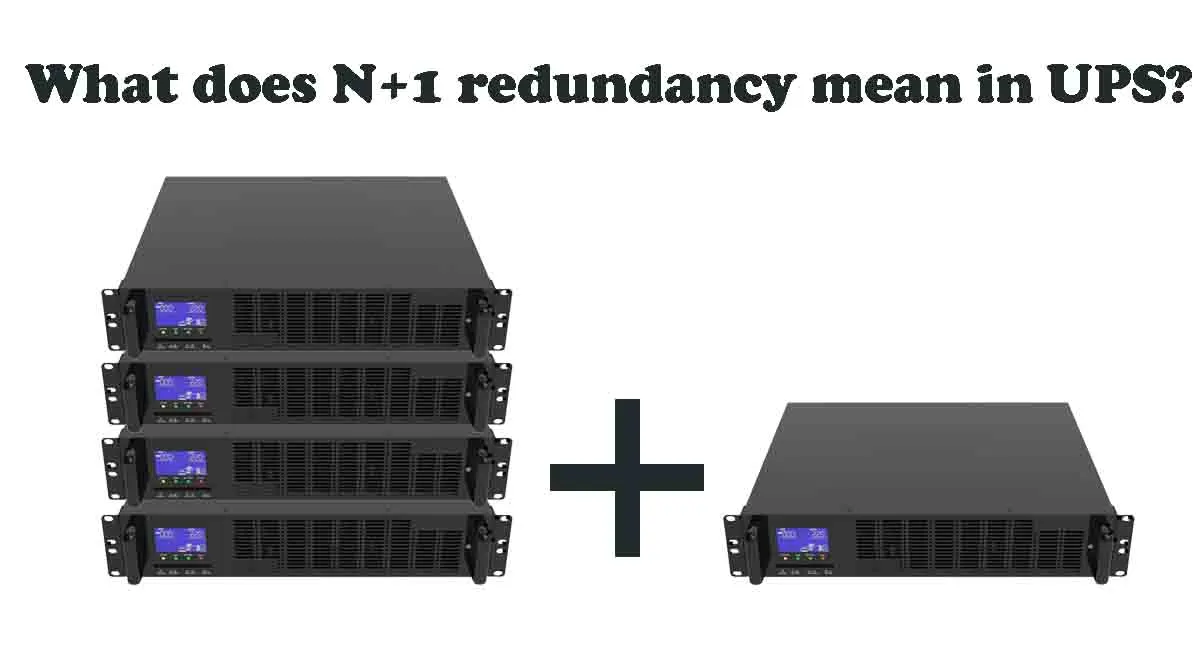
The N in N+1 redundancy represents the number of UPS units required to meet the actual load demand. N+1 redundancy refers to configuring one additional UPS unit for lithium UPS system above the number required to meet the actual load demand. N+1 redundancy can ensure that, during a failure of one UPS unit in the system, the remaining UPS units will seamlessly take over, keeping your equipment running continuously. If your small data center requires at least two rack mount UPS to operate, equipping it with three UPS units would constitute N+1 redundancy.
Why is N+1 redundancy needed?
N+1 redundancy can provide additional protection for your power supply. We all know that when the mains power fails, UPS will keep critical equipment running. Without N+1 redundancy, if the UPS fails, it will increase the risk of extended downtime and data loss, which will increase your operating costs. With N+1 redundancy, even if one UPS module fails, the system can still provide uninterrupted power to keep your loads running. It also enables you to perform maintenance or upgrades online, minimizing business disruption.
The benefits of N+1 redundancy
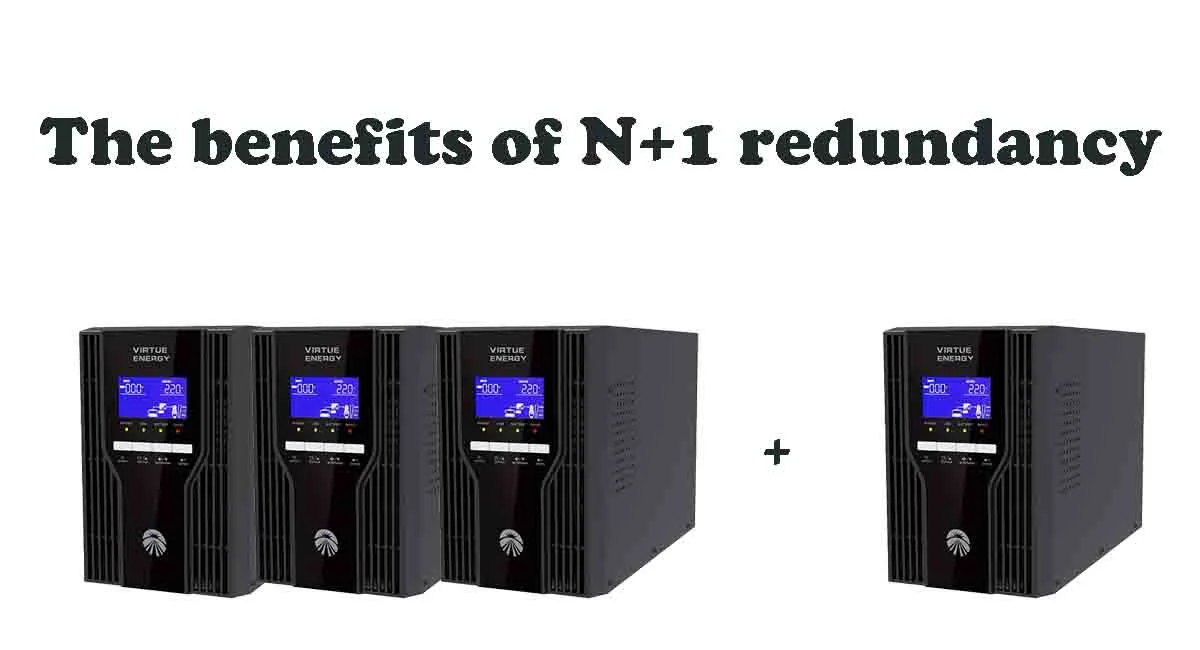
- Improve system reliability: UPS can provide power support when the utility grid fails, keeping your business running continuously. However, if one UPS unit fails, the entire load will be subject to the risk of a power outage. The greatest advantage of N+1 redundancy is its ability to improve the reliability of the entire UPS system. If any UPS unit in the system breaks down, other UPS units will seamlessly take over the entire load, ensuring your critical business remains operational.
- Realize online maintenance: Traditional UPS often require switching loads to maintenance bypass mode before maintenance. This means that load equipment may experience downtime. In some cases, the system was planned to be shut down for UPS maintenance. But if your UPS system is configured with N+1 redundancy, maintenance personnel can test, maintain, or replace UPS modules one by one online. In this process, your business operations will not be interrupted.
- Reducing total cost: Although N+1 redundancy increases the initial investment in the project, it helps reduce the costs of later maintenance and replacement of the UPS system over the long term. When a single UPS module fails, we can replace only the faulty module without having to replace the entire system. Furthermore, business can continue uninterrupted during the replacement process. This will minimize downtime and its associated financial impact. Additionally, if business growth requires capacity expansion, we can simply add new lithium UPS modules to the system without having to replace the entire UPS system.
What are the differences between N+1 redundancy and 2N redundancy?
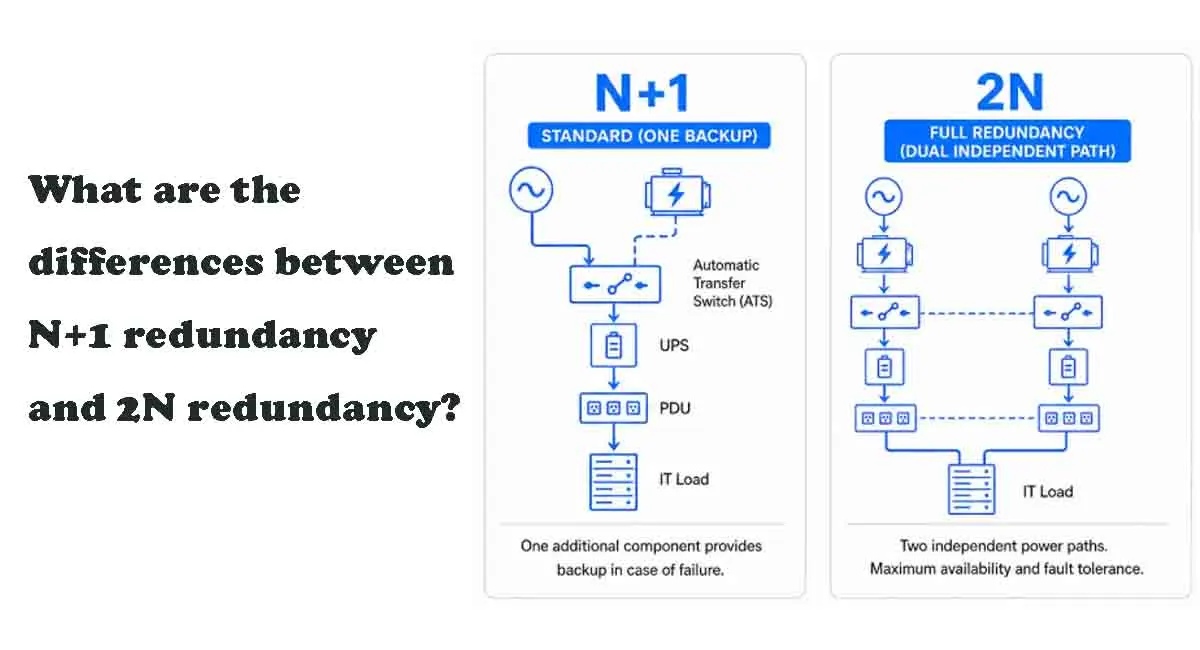
N+1 redundancy and 2N redundancy provide different levels of protection. N+1 redundancy is a modular protection system. When one lithium UPS module fails, the remaining lithium UPS modules will immediately take over to provide uninterrupted power supply. In contrast, 2N redundancy provides comprehensive system protection. It consists of two independent UPS systems. If one UPS system encounters a failure, another system will seamlessly take over. This level of protection is extremely high and commonly applied in applications that cannot tolerate any power interruptions. If you are looking to further enhance the reliability of your uninterruptible power supply with a limited budget, N+1 redundancy is a suitable option.
What applications need N+1 redundancy?
In applications where equipment failure could lead to serious consequences, deploying N+1 or higher levels of redundancy is essential. This can ensure that the power supply to critical equipment remains protected. And your critical mission will not be disrupted by the failure of a single UPS. Banks, data centers, and securities trading centers are typical applications for N+1 redundancy. In these scenarios, power loss will result in severe consequences, such as financial losses, business interruptions, and customer attrition. Medical equipment in laboratories, operating rooms, and ICU is also equipped with lithium UPS systems featuring N+1 redundancy to ensure a reliable power supply. If you would like to equip your application with a lithium UPS featuring N+1 redundancy, please feel free to contact us for a customized solution.
Conclusion
In summary, although N+1 redundancy requires purchasing an additional UPS module, it provides an extra safeguard for your power protection. It can effectively prevent the risk of business interruptions caused by a single UPS failure. If you are unsure whether you need a UPS solution with N+1 redundancy, please do not hesitate to contact us for professional advice.