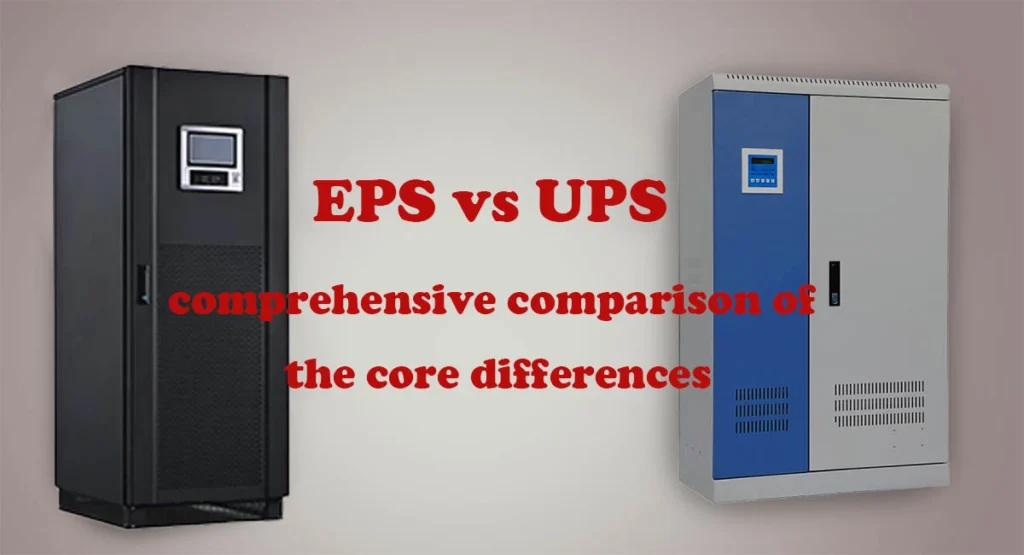
Today, electric power is essential for both work and entertainment. However, the power grid cannot always provide a stable supply to keep electronic devices running continuously. Power fluctuations and unexpected outages may occur at any time. In order to prevent equipment downtime caused by such situations, we will choose reliable power protection solutions to ensure our work, daily life, and entertainment remain unaffected. EPS vs UPS are both well-known power protection devices. But how do we choose the most suitable power protection solution between EPS power supply and UPS power supply?
What is UPS and EPS?
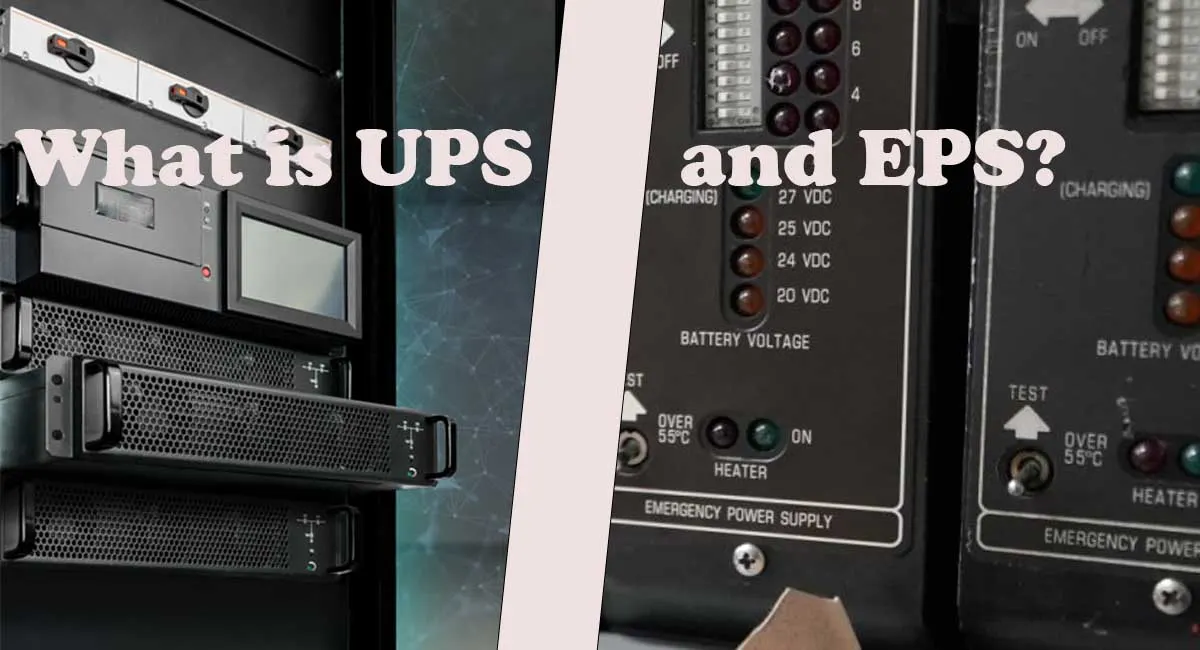
The full name of UPS is Uninterruptible Power Supply. It is a power protection device that provides seamless power during mains power outages, ensuring the continuous operation of critical equipment. And EPS stands for Emergency Power Supply. This is a backup power system specifically designed for fire safety and life safety. As a professional lithium UPS provider, Virtue Energy can offer UPS that integrate lithium iron phosphate (LiFePO4) batteries and inverters. When the grid power is unstable or interrupted, it can supply battery power to the load equipment within milliseconds, helping your computers, servers, and other critical equipment continue to operate. Meanwhile, EPS can provide power support to equipment requiring long-term power after a utility power outage, such as emergency lighting, fire pumps, smoke exhaust fans, and elevators.
What is the difference between EPS vs UPS power supply?
Different design philosophies
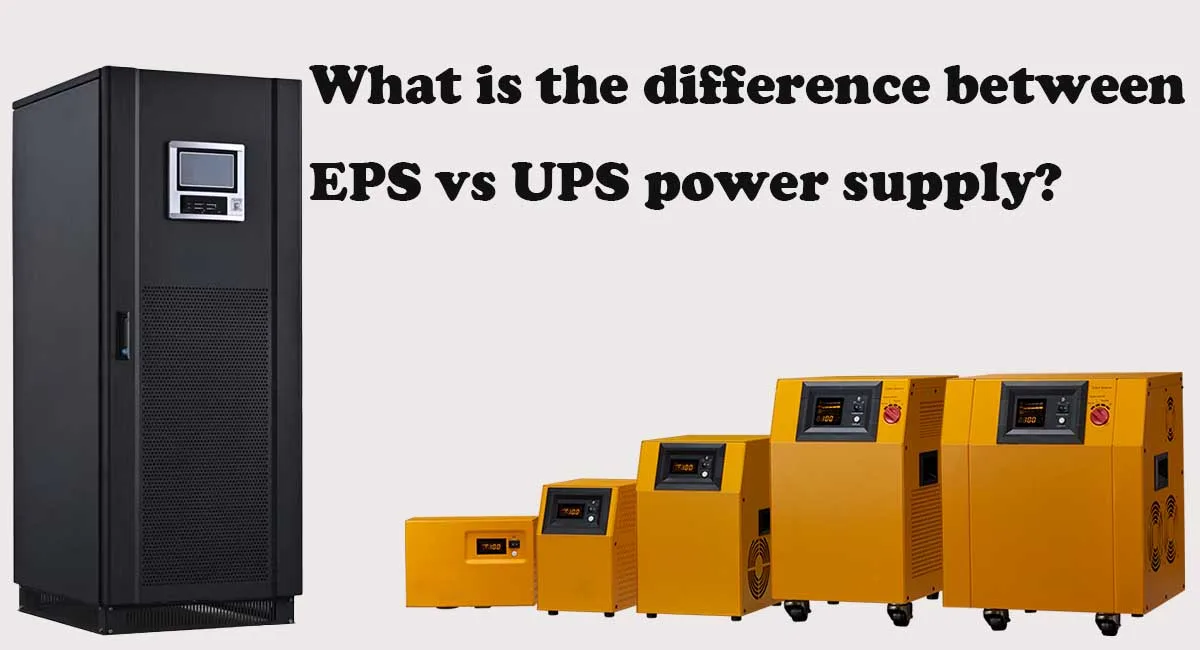
Although both are devices designed to provide power to critical equipment, the scenarios and requirements for EPS vs UPS are different. For critical equipment used in data centers, securities trading, and other power-sensitive environments, these systems are highly vulnerable to unstable or impure power. A power outage can result in significant financial losses. But UPS not only filters impurities from the mains power to provide clean electricity but also delivers immediate power support during an outage to maintain business operations and ensure equipment shuts down properly. On the other hand, an EPS is specifically designed for emergency scenarios, primarily to ensure the safety and security of personnel.
Different loads
UPS and EPS are designed for different types of equipment. If your critical equipment is capacitive or resistive load devices, you should choose UPS. This is because these devices have higher power requirements. They need a pure sine wave, low harmonic distortion, and voltage stabilization and filtering. Virtue 1-3kVA UPS can provide stable and clean power for your small IT equipment, computers, storage devices, laboratory instruments, and other precision equipment. It ensures that your business operations will not be interrupted due to sudden power outages. On the other hand, EPS is designed to power motor-driven equipment. Because most of these devices are inductive, such as fire pumps, elevators, and roller door motors. These devices can withstand high current surges and do not have high requirements for power waveforms.
Different backup time
Based on their application scenarios, the backup times for EPS vs UPS also differ. Generally, the UPS backup time ranges from 5 to 30 minutes. If you require a lithium UPS with a longer backup time, please contact us for a customized solution. Meanwhile, the backup time for an EPS is typically between 2 and 4 hours. For precision instruments, it is essential that they can save data and shut down properly during critical moments, wait for the generator to start, and handle brief power outages. Therefore, the backup duration of UPS is generally between 10 and 30 minutes. In contrast, EPS needs to ensure sufficient time for personnel evacuation, provide continuous power to emergency lighting for at least 90 minutes in accordance with relevant fire safety regulations, and ensure the continuous operation of fire safety equipment. As a result, its backup time is typically over 2 hours.
Different switching times
Virtue lithium UPS is an online UPS. When power is interrupted, it can switch to battery power in 0 milliseconds. This means that the connected equipment will not detect any power interruption and maintain normal operation. Of course, there are also have interactor UPS and standby UPS. The switching time for an interactor UPS is 2–6 milliseconds, but this is still faster than the tolerance threshold of most devices. Therefore, you can select a suitable UPS type based on the equipment you are using. Although EPS also offers online models, its switching time ranges between 100-250 milliseconds. While precision equipment such as servers and medical devices will detect power interruptions during this period. However, for power-driven equipment like emergency lighting, fans, and water pumps, this switching time will not affect their normal operation.
Different power quality
UPS provides pure sine wave with waveform distortion of less than 3%. It also features automatic voltage regulation, which corrects for overvoltage or undervoltage, delivering laboratory-grade clean power to sensitive electronic equipment. EPS can output either square waves or modified sine waves, making it fully suitable for power-intensive loads such as motors and lighting. However, it may cause interference or damage to precision electronic equipment. Therefore, we must select the most appropriate option between EPS vs UPS based on the actual application scenario.
EPS vs UPS which is the right power supply for your project?
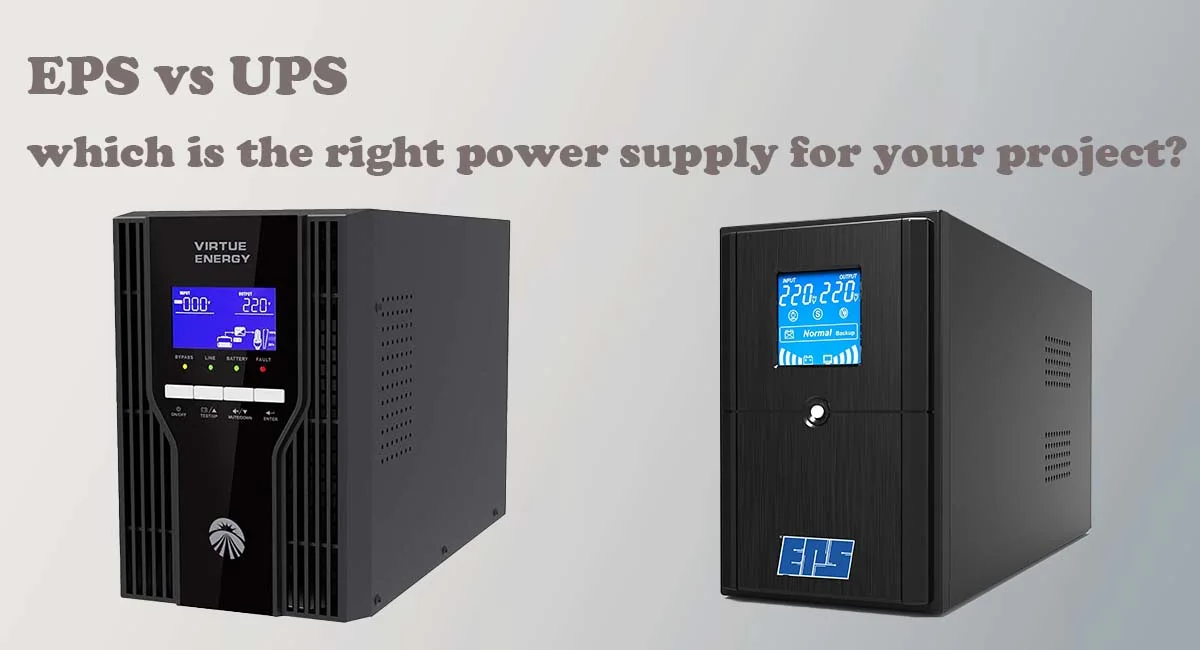
When comparing EPS vs UPS, some people assume they are both backup power solutions and think them is similar. In reality, EPS vs UPS are designed for different application scenarios and equipment. This means that when selecting a backup power solution, you should consider the actual usage scenario and the specific equipment involved. If you are using it in server rooms, data centers, medical equipment, industrial automation control systems, or similar environments, uninterruptible power supply (UPS) would be more suitable for your project. If you require extended backup runtime, please contact us for a power protection solution meeting your specific duration requirements. For applications such as fire protection systems and emergency systems in high-rise buildings, large shopping malls, and hospitals, we recommend choosing EPS.
Conclusion
EPS vs UPS are power protection devices, but they are not alternative solutions. We need to select the most suitable power protection solution based on the specific application scenario and requirements. UPS provides reliable and clean power protection with zero-millisecond response time for critical applications such as data centers, hospitals, and financial systems. And EPS provides extended runtime for high-rise buildings, underground spaces, and fire protection facilities, ensuring emergency equipment is effectively protected during a power outage.