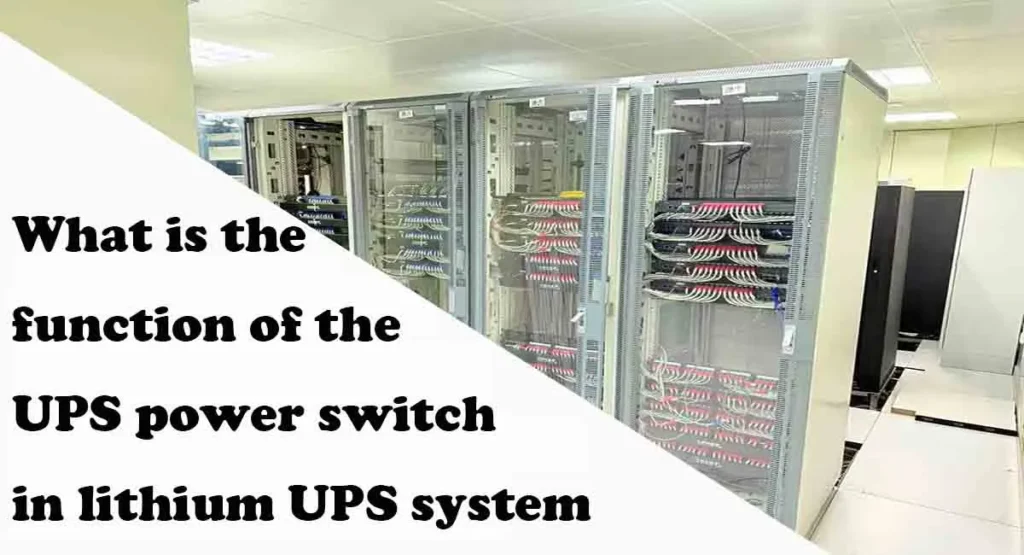
In the design and daily operation and maintenance of lithium UPS systems, UPS power switch is the most easily overlooked but the most critical component. Most people think there are only 4 UPS power switches in the UPS unit and the power distribution cabinet. Actually, there are 8 UPS power switches. They include the main input switch, maintenance bypass switch, static transfer switch, and external maintenance bypass, each of them playing an important role. This article can help you better select and configure switches for the design and operational maintenance of your lithium UPS system.
What is UPS power switch?
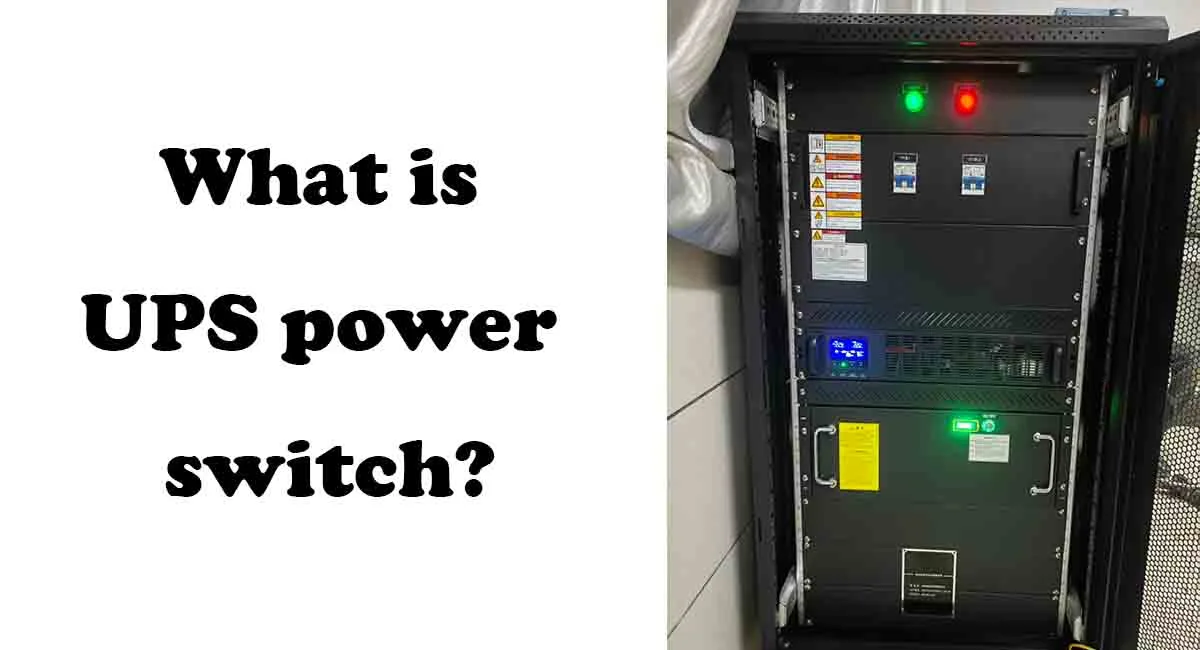
UPS power switch is a key component. It can ensure the safe operation of the UPS system, realize uninterrupted power supply, and enable online maintenance. From small 1kVA lithium UPS to UPS systems rated at over 1,000kVA, all include UPS power switches. UPS power switch is used in UPS system to control power supply, perform circuit switching, and provide electrical isolation. Examples include our familiar static switches, input switches, bypass switches, and other switches.
Understanding UPS power switch types and functions
In technical documentation, UPS power switch is typically classified into UPS internal switches and UPS power distribution switches. The following classification is based on function.
Input isolation switch: The input isolation switch can control whether mains power is connected to the UPS rectifier. When we need to repair or replace internal UPS components, turning off this switch can isolate the input power supply. It can ensure operators avoid working with live electricity.
Bypass input switch: The bypass input switch can provide the UPS with redundant backup power. When the UPS cannot operate normally due to inverter failure, rectifier failure, or other issues, it will switch to bypass power supply mode. In a dual-power-source configuration with different power sources, if the main power supply fails, the UPS will switch to the backup battery bank. Once the LiFePO4 battery bank is depleted, the UPS will switch to bypass power supply mode. When powered by a single power source, an overcurrent in the input cord caused by a short circuit between input phases or a UPS failure will trigger the UPS’s main input circuit breaker to trip. At this point, the UPS will switch to power from the LiFePO4 battery pack. When the LiFePO4 battery pack is depleted, the UPS will switch to bypass mode.
Output switch: The output switch can control whether the purified power from the UPS is supplied to the connected equipment.
Static transfer switch: Static transfer switch is a contactless electronic switch composed of thyristors. When the inverter fails, it can switch the load from the inverter to the bypass power supply within milliseconds, ensuring the connected equipment does not experience any power interruption.
Maintenance bypass switch: As the name suggests, this switch is used to perform maintenance on an uninterruptible power supply. Because its installation location, we commonly call it an internal maintenance bypass switch or an external maintenance bypass switch. Under normal circumstances, the maintenance bypass switch is in the open position. When the UPS requires online maintenance or debugging, the UPS switches to bypass power supply mode. Then close this switch, the input utility power will bypass the UPS directly to supply power to the load equipment. At this point, the UPS’s input and output switches can be disconnected, and the UPS can be maintained or debugged online.
Interconnection switch: Interconnection switch can connect or disconnect multiple UPS units connected in parallel. If you need to expand or reduce the capacity of your lithium UPS system, the interconnection switch can help you realize online adjustments.
Difference between UPS internal switch vs power distribution switch and their functions
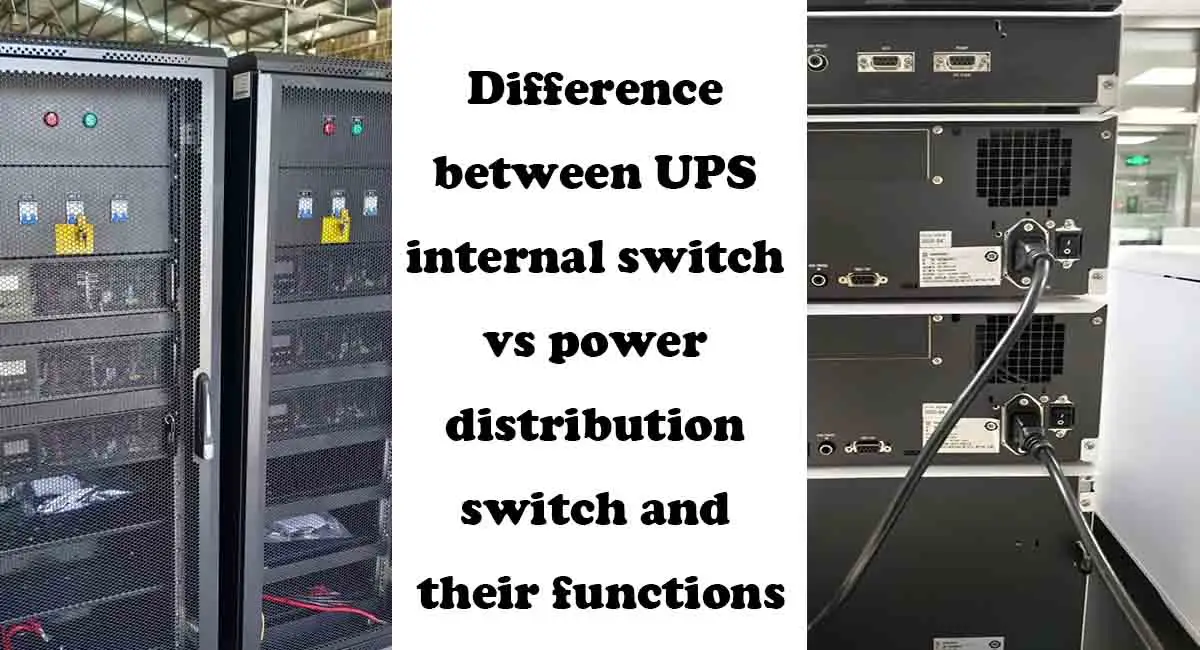
The UPS internal switch and the UPS power distribution switch are two types of UPS power switches. The internal switch is installed inside the UPS and is generally designed as an isolating switch. And it does not provide overcurrent protection or the ability to disconnect under load. It can make the UPS automatically switch between battery power and bypass power, connect or disconnect input and output. On the other hand, the power distribution switch is installed in a power distribution cabinet outside the UPS. Its primary function is to protect power distribution cables, coordinate with upstream and downstream power distribution switches to prevent the escalation of power distribution line faults. Another function is to isolate the UPS from the input and output terminals, providing safer maintenance operations for service personnel.
How to select power distribution switch for single-phase UPS and three-phase UPS?
Choosing the right UPS power switch requires considering the power supply type and application scenario. Incorrect selection may result in filter failure, neutral point drift, or even equipment damage. For single-phase UPS systems, it is recommended to use a 1P switch for both the input and output power distribution circuits. Additionally, the input neutral wire and the output neutral wire must not share the same neutral busbar. Because the input neutral wire of a single-phase UPS undergoes filtering. If the input and output share the same neutral busbar, this filtering function will be bypassed. If using 2P switch with the input and output on separate neutral busbars, when the input switch is turned off, the output neutral wire will lack a reference neutral potential, resulting in zero-point drift.
Common high-frequency single-phase UPS systems do not support dual-power-input functionality, so they do not require bypass switch. For high-end single-phase UPS models that support dual-power input, whether installing bypass switch is based on the specific model. If required, you may refer to the selection guidelines for three-phase bypass switches or directly contact us for advice. Additionally, it is recommended to use 2P switch for the external maintenance bypass switch of a single-phase UPS. This can ensure that the neutral wire is disconnected, achieving complete electrical isolation.
On the other hand, for three-phase UPS systems, it is recommended to use 3P switches for the input, output, and bypass power distribution circuits. When the UPS system is designed with dual power sources from different sources, the neutral wires from both the main and bypass power sources only need to be connected to the bypass neutral wire. And this requires that both power supply inputs from different sources follow the TN system configuration. Because the UPS only requires a neutral line for neutral potential reference and it does not participate in the UPS’s internal operations. Common three-phase UPS systems are equipped with dual-input functionality. For the external maintenance bypass switch of three-phase UPS, it is recommended to use 4P switch. In this way, the neutral line at the UPS end can be disconnected, completely isolating the UPS system from the power distribution system and ensuring safety during operation.
Frequently asked questions about the UPS power switch
Q1: If UPS is equipped with built-in switch, is it possible to omit the UPS power distribution switch?
No, regardless of whether the UPS is equipped with a built-in switch, the external UPS power distribution switch must be installed. Because the built-in switch on the UPS only serves an isolation function.
Q2: Does the maintenance bypass switch need to be locked?
We recommend locking the maintenance bypass switch to prevent accidental operation by unauthorized personnel.
Q3: How to safely operate the maintenance bypass switch?
There are strict procedural requirements for operating the maintenance bypass switch. First, you must switch the UPS to bypass mode and confirm the bypass status is normal. Then, you can close the maintenance bypass switch. After maintenance is complete, follow the reverse procedure. Open the maintenance bypass switch, and the system will automatically switch back to normal mode.
Conclusion
The UPS power switch is a critical component that ensures lithium UPS systems operate safely, provide uninterrupted power, and enable online maintenance in critical environments such as data centers, medical facilities, and financial trading centers. Different types of UPS power switches have variations in functionality, switching speed, and isolation capabilities. These switches not only enable the UPS to rapidly switch between the inverter and bypass modes, ensuring uninterrupted power supply, but also provide operations and maintenance personnel with a safely isolated physical disconnect point.