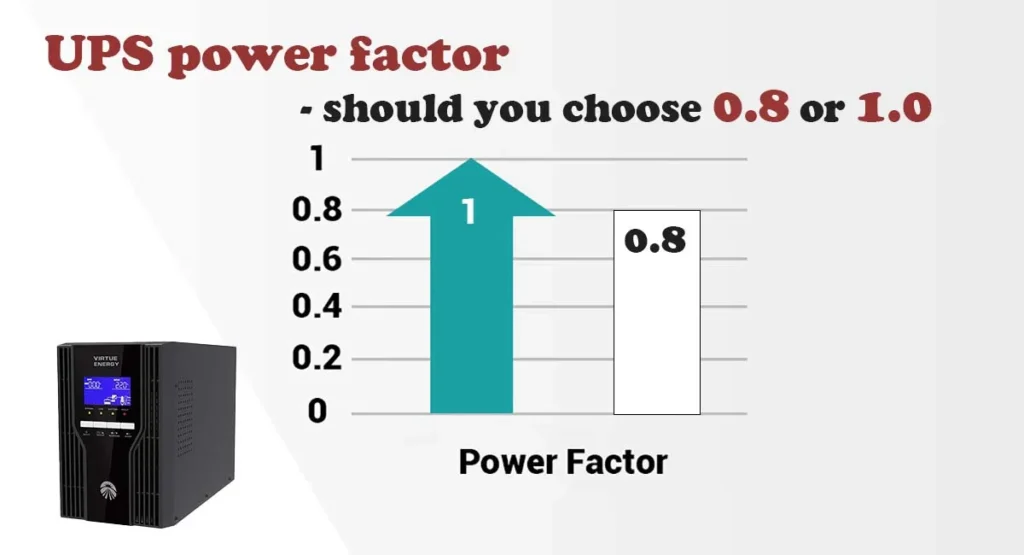
When selecting a lithium UPS, the UPS power factor is a critical technical parameter to consider. When choosing UPS for data centers, trading systems, and such projects, many users only focus on kVA without paying attention to the UPS power factor. A 1kVA UPS with an output power factor of 0.8 can only provide 0.8 kW active power to critical equipment. This means that 20% of its capacity has been wasted. In contrast, our 1kVA UPS power factor can reach 1.0. This means it can actually provide 1kW effective power to your critical equipment. Power factor not only affects UPS capacity utilization but also directly impacts the input power distribution system, generator matching, cable losses, and overall energy efficiency. Let’s learn more about UPS power factor.
What is UPS power factor?
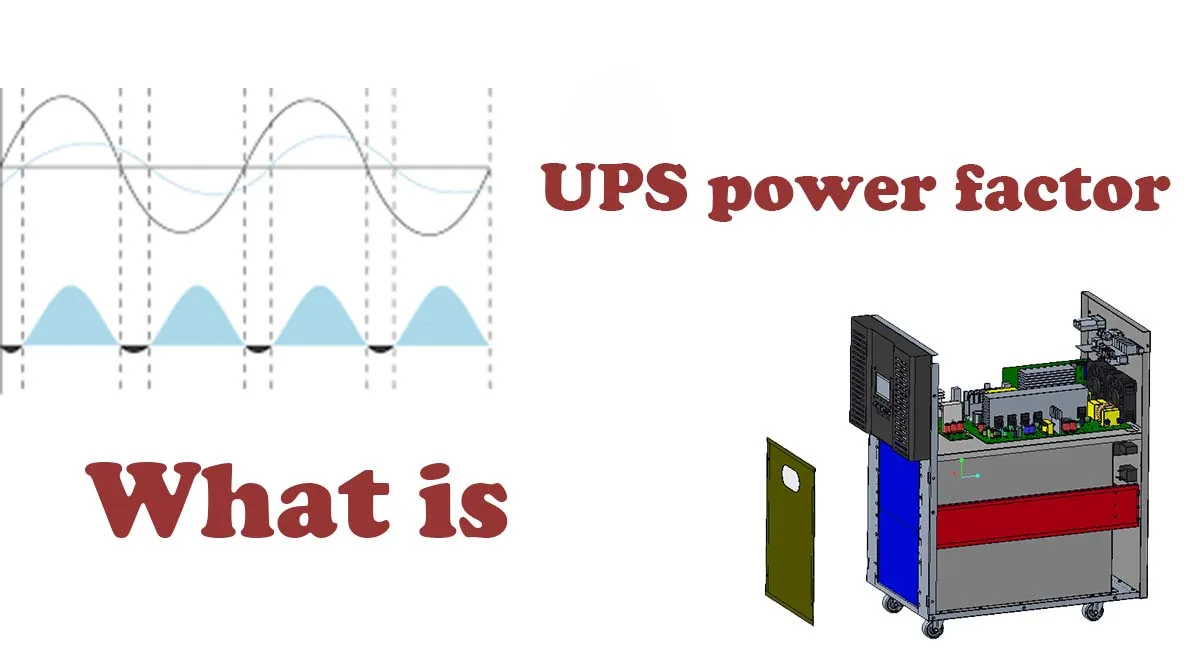
The UPS power factor is a key indicator of the energy efficiency of an uninterruptible power supply (UPS) system. It represents the ratio of active power (kW) to apparent power (kVA). UPS power factor ranges between 0 and 1.0. If the power factor is closer to 1.0, it means the electrical energy utilization efficiency is higher, and the UPS capacity utilization is also higher. For two UPS units with the same 100 kVA capacity, UPS with 0.8 output power factor can only support 80kW devices. In contrast, lithium UPS with 1.0 output power factor can support 100kW loads.
Types of UPS power factor
UPS power factor includes input power factor and output power factor. We can analyze the UPS power utilization efficiency by examining its input power factor. When the UPS input power factor is closer to 1.0, it represents the power utilization efficiency is higher, and energy losses in the power grid and distribution system are lower. On the other hand, The output power factor allows us to assess the UPS’s ability to handle different loads. Higher output power factor means it can carry more load.
What is the difference between input power factor and output power factor?
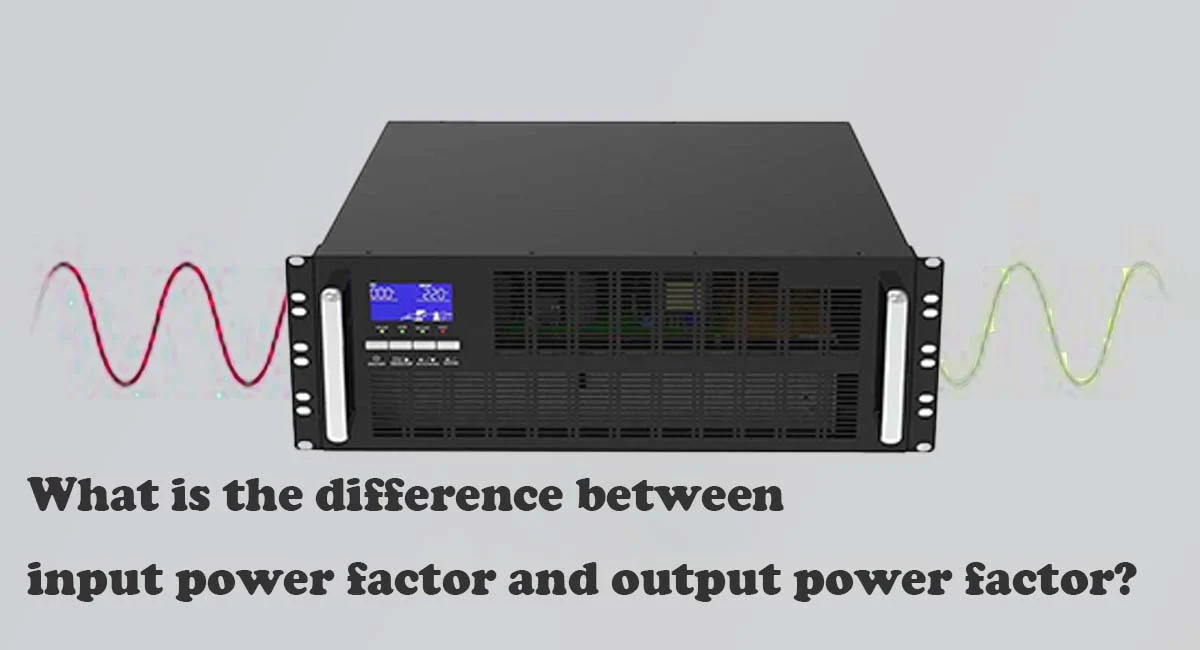
The input power factor refers to the input side of the UPS. It represents the UPS’s efficiency in utilizing electrical energy when it acts as a load on the power grid. The output power factor refers to the output side of the UPS. It represents the UPS’s ability to supply active power to connected devices. In other words, if we want to know how many devices a lithium UPS can provide power protection, we need to consider the output power factor.
The higher the input power factor, the less the UPS pollutes the power grid. As a result, we can use smaller transformers, cables, generators, and other equipment, making it possible to reduce capital costs. The output power factor determines the UPS’s capacity utilization. A 10kVA UPS with 0.8 output power factor can provide 8kW active power to the equipment. A 10kVA UPS with 1.0 output power factor can provide 10kW active power, achieving 100% capacity utilization.
The input power factor primarily depends on the UPS’s rectification technology. Traditional line-frequency UPS typically has an input power factor of only around 0.8, whereas high-frequency units can achieve an input power factor of 0.99 or higher. The output power factor depends on the overall design of the UPS. If you need a lithium UPS with 0.9 or 1.0 output power factor, feel free to choose us.
How to choose the right UPS power factor?
When selecting the appropriate UPS power factor for your critical applications, you need to calculate the active power and take into account the compatibility of the load. The UPS rated capacity is typically expressed in kVA (apparent power), and the load actually uses kW (active power). The conversion between kVA and kW is determined by the output power factor. Active power (kW) = Apparent power (kVA) × Output power factor (PF). If a 20 kVA UPS has an output power factor of 0.9, it can provide 18kW active power to the load.
On the other hand, the choice should be based on the actual load of the application. Different applications have different loads, so the requirements for lithium UPS output power factor also vary. For IT equipment such as data centers, servers, and switches, it is recommended to select a UPS with an 0.9/1.0 output power factor . For industrial loads such as motors and transformers, you can choose a UPS with a low input power factor and an 0.8 output power factor. For medical precision instruments such as CT scanners and patient monitors, you can select input power factor of 0.9/1.0 lithium UPS. Virtue Energy UPS is optimized for different load characteristics, and we can provide you with a customized lithium UPS solution based on your specific application scenario.
How to calculate the UPS power factor?
With accurate input and output power factors, you can calculate the UPS power factor using the appropriate formula: Power Factor (PF) = Active Power (P) / Apparent Power (S). Understanding how to calculate the UPS power factor helps us make more informed decisions when selecting UPS, avoiding issues such as wasted capacity or under-configuration of lithium UPS systems. Of course, you can provide us with details about your critical loads and requirements, we will help you select the optimal lithium UPS based on your specific needs.
Conclusion
By examining the UPS power factor, we can not only determine the capacity and actual usable power of the uninterruptible power supply, but also assess how efficiently the system utilizes electrical energy while providing power protection. Currently, our lithium UPS power factor can reach 0.9 and even 1.0. This means that, compared to UPS systems of the same power rating, our lithium UPS can support more critical equipment for your mission-critical applications. Furthermore, our lithium UPS use lithium iron phosphate batteries, you don’t need to worry about space requirements. If you’d like to learn more about our UPS power factor, please feel free to contact us.