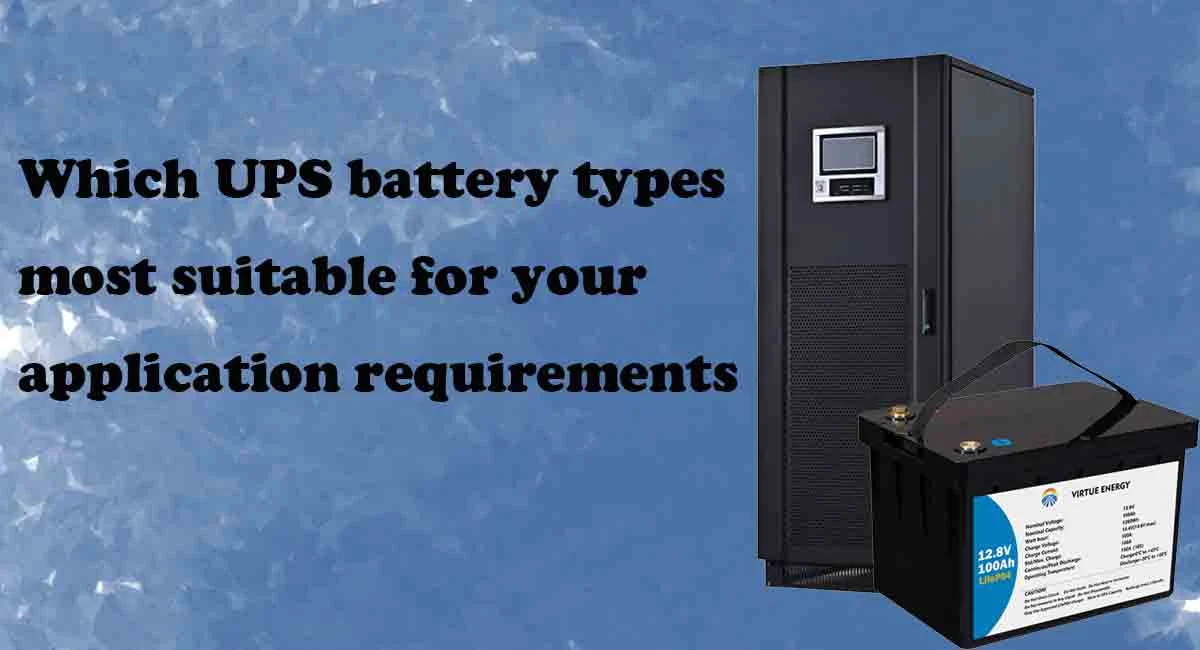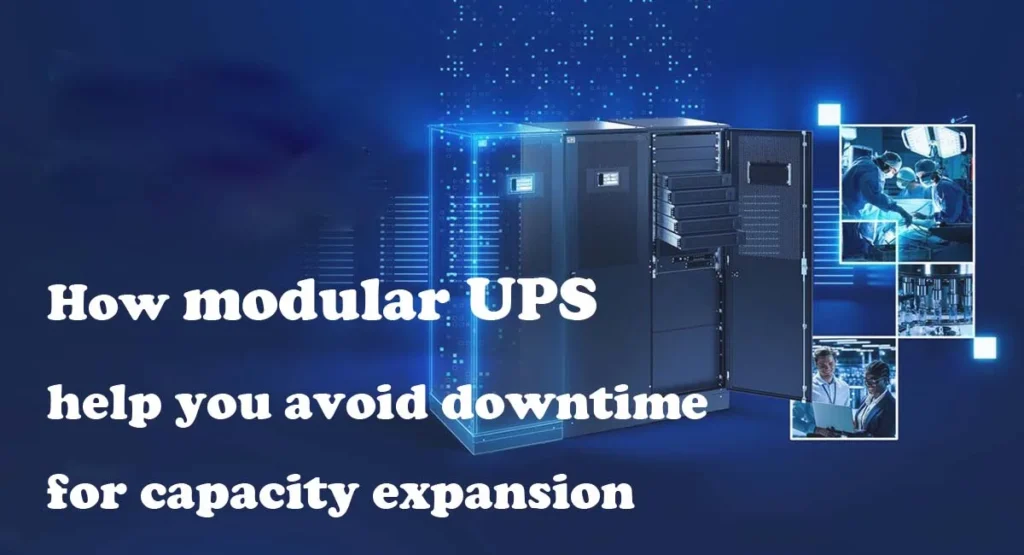
As we know, uninterruptible power supply (UPS) is widely used in modern data centers, trading systems, and network communication applications. With business expansion, you may need to add more equipment. This means you’ll also need to increase the power capacity of your UPS. And modular UPS can help you flexibly configure your system to meet your business’s flexible power requirements.
What is a modular UPS?
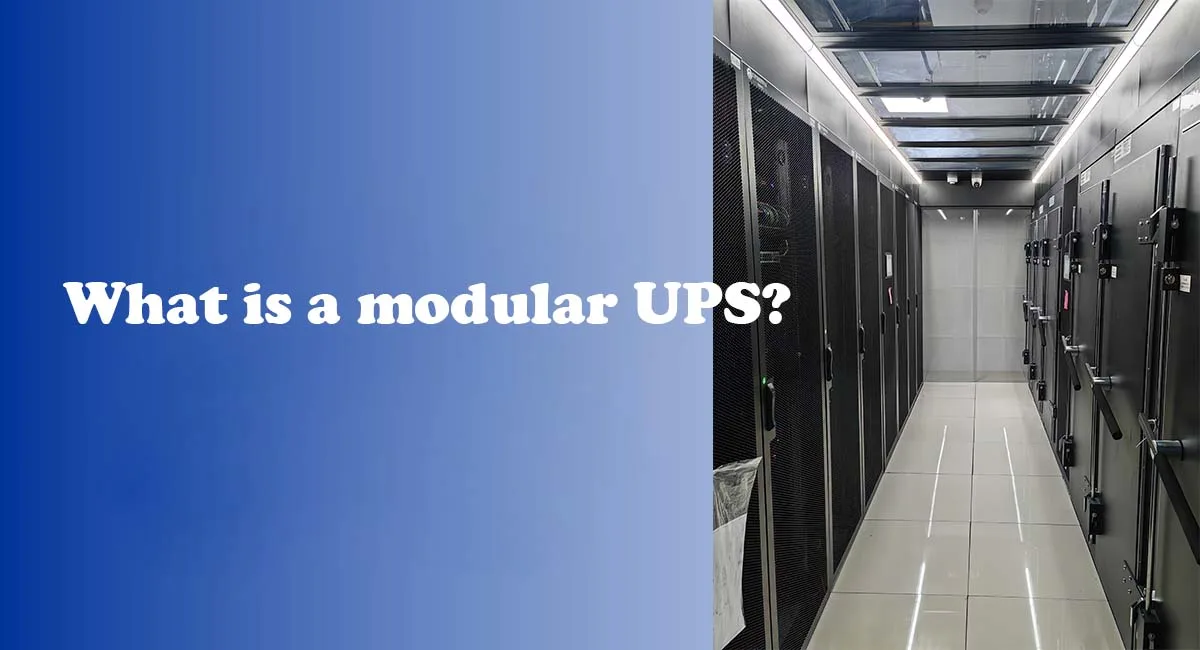
Modular UPS is an uninterruptible power supply system designed with a modular structure. In a modular UPS system, the inverter, static bypass, control system, and other functional components are all designed independently. We can install these components in parallel within one or more cabinets to build a complete uninterruptible power supply system. Based on this design, we can directly insert or remove any single functional component without shutting down the UPS system’s power supply. This means that when performing maintenance or expanding the system, we do not need to shut down the power protection system, avoiding business interruptions.
The components of modular UPS
Most modular UPS systems on the market consist of a cabinet, power modules, static switch modules, display and communication modules, control modules, and battery modules. However, the specific components may differentiate across brands and manufacturers. Please feel free to contact us for more detailed information if you would like to know more. As a professional lithium UPS manufacturer in China, Virtue Energy can provide high-quality modular UPS and OEM lithium UPS solutions to global customers.
The benefits of modular UPS systems
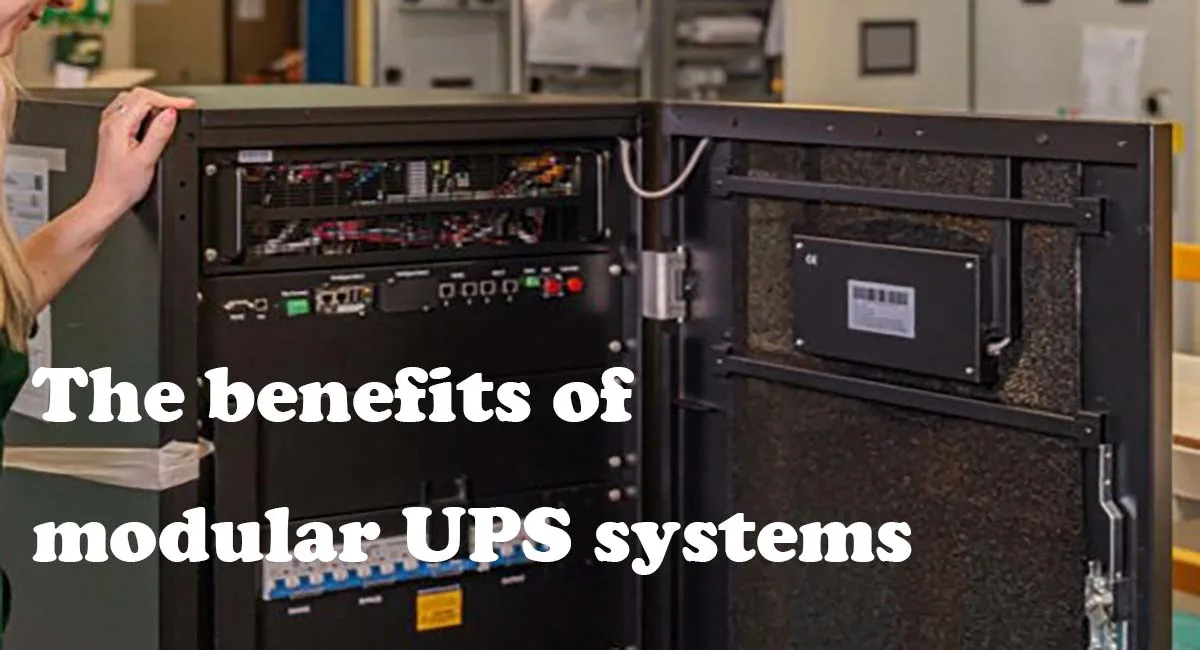
- Flexible power configuration: The most immediate advantage of modular UPS is it can be configured according to actual usage requirements. When selecting a traditional UPS, users often choose a capacity that exceeds their current needs to ensure future redundancy. But modular UPS can help you avoid having to anticipate future business growth and avoid premature capital investment when purchasing. If your business expands in the future, you can simply add power modules to expand capacity online.
- More reliable power protection: Modular UPS enables online maintenance through an N+X redundant architecture and hot-swap technology. Whether adding, removing, or maintaining modules, all operations can be performed online. If a module fails, other modules will automatically take over the entire load. During this process, equipment will not experience any interruptions. In other words, a single module failure will not cause the system shutdown.
- Minimize downtime during system maintenance: Maintaining a modular UPS system takes only about 5 to 10 minutes. And it doesn’t require a professional engineer, just regular maintenance staff can easily handle the repairs. Furthermore, the UPS will continue to operate during maintenance, and the load equipment won’t notice any changes.
Save valuable space: Compared to traditional UPS systems of the same capacity, modular UPS systems occupy less floor space and carry a lower weight. Our modular UPS systems are equipped with lithium iron phosphate (LiFePO₄) batteries, which minimize footprint and weight while freeing up even more space. In other words, in applications where space is limited, they take up less room, ensuring the possibility of expanding critical equipment.
What is the difference between conventional UPS and modular UPS?
In modern digital application scenarios, power protection systems typically rely on modular UPS or traditional tower UPS. Modular UPS and conventional UPS have significant differences in terms of design, scalability, and overall cost. When we refer to traditional UPS, we generally mean rack mounted UPS. For example, our rack mounted 1-3 kVA lithium UPS. This is an uninterruptible power supply system that integrates a rectifier, inverter, battery, and control system into a single unit. It is plug-and-play. In contrast, a modular UPS features a building-block style modular design. The power units, battery units, and control systems are all independent standard modules. You can insert or remove the appropriate components from the cabinet based on your actual power requirements.
If you want to increase the capacity after purchasing a traditional UPS, you need to buy a lithium UPS with a higher power rating or connect more lithium UPS units in parallel to meet the growing business demands. Conversely, if you initially purchased a modular UPS, when you need to increase the power capacity, you simply need to purchase a new power module and install it into the system. This option is more cost-effective than traditional UPS systems, and you do not need to shut down the UPS system while adding power. Therefore, you can avoid business interruptions during system maintenance or expansion. Traditional UPS systems are typically used in scenarios where the load is stable, space is ample, and there is no need for frequent capacity expansion. For applications with rapid business growth or those requiring high availability, modular UPS can offer more cost-effectiveness and flexibility. Whether you’re looking to configure modular UPS or lithium UPS for your application, please feel free to contact us for a customized solution and quote.
Which is better, modular or non-modular?
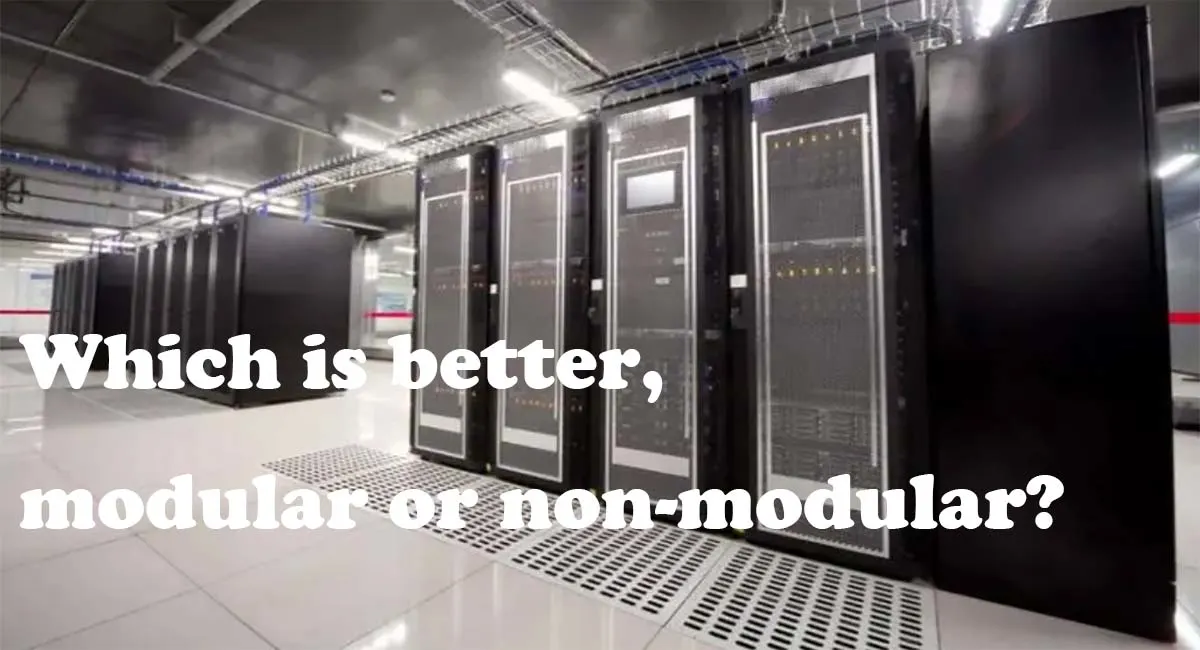
When selecting lithium UPS, you should choose between modular and non-modular UPS systems based on your specific project requirements. You can contact us via email or WhatsApp to share your project needs. We will provide a professional UPS solution tailored to your specific needs. Additionally, we can manufacture custom lithium UPS based on your specific application. Although non-modular UPS units have a lower initial purchase cost, modular UPS is a better choice if your business plans to expand in the future. However, if your project load is stable, traditional UPS is a good option.
Conclusion
Modular UPS solves the pain points associated with traditional UPS systems, such as fixed capacity, complex maintenance, and difficulty in scaling. The N+X redundancy architecture enables online maintenance of the power protection system, ensuring that critical operations no longer need to be interrupted for system maintenance. If your critical equipment’s power requirements are continuously increasing and your business is expanding, modular UPS is a highly recommended choice. Although modular UPS is a standardized product, you can flexibly configure power capacity, battery backup duration, and redundancy levels to meet your specific operational needs. It offers the convenience of standard UPS maintenance while accommodating the diverse requirements of different users.