UPS bypass mode is one of the functions of uninterruptible power supply (UPS) system. When the UPS fails or requires maintenance, UPS bypass mode can directly transfer mains power to the connected equipment, ensuring your critical equipment has continuous power support.
What is UPS bypass mode?
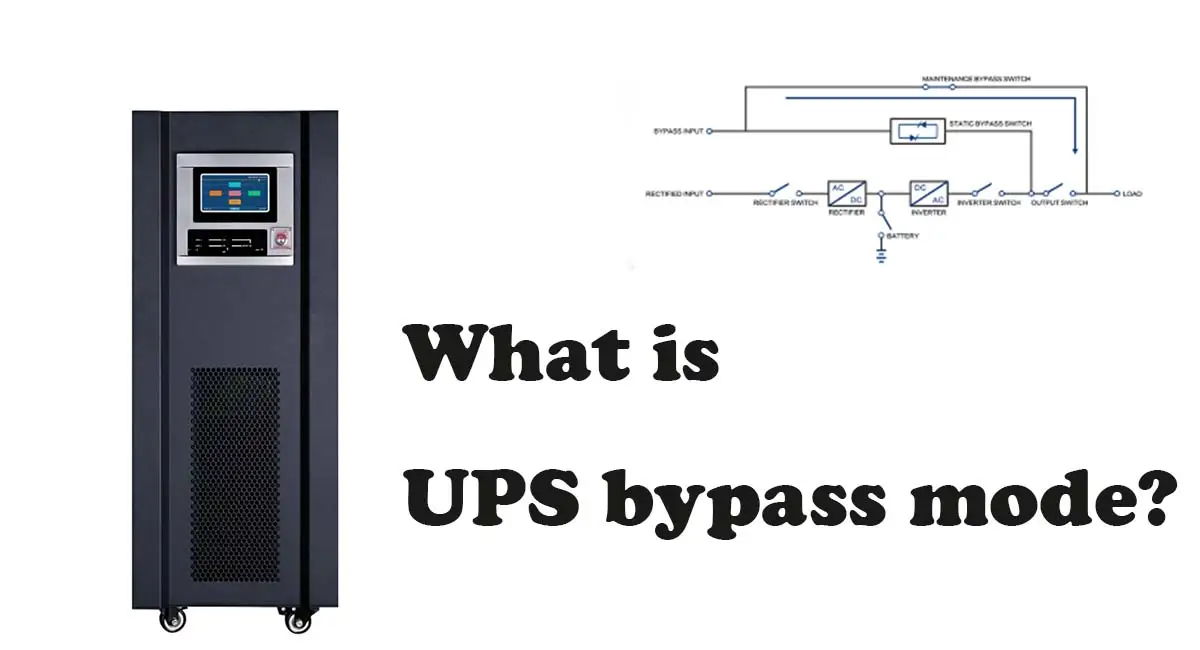
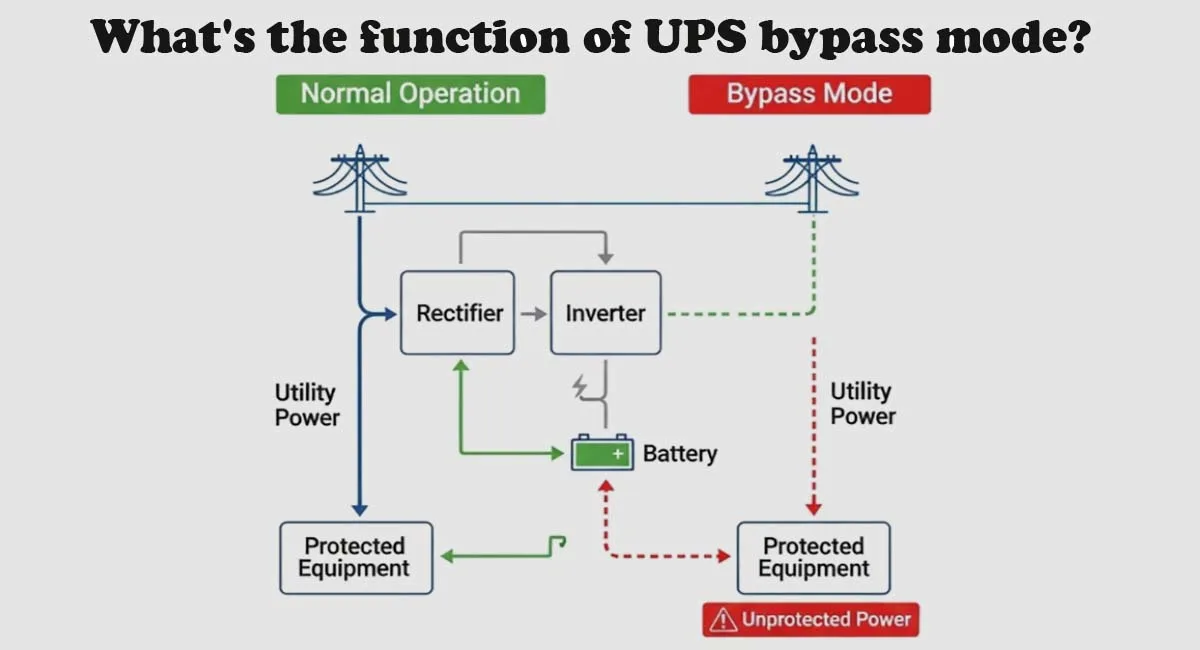
UPS bypass mode is one of the operating states of UPS power supply. As we all know, one of the functions of UPS is to filter out impurities from the utility power supply and provide clean power to critical loads. When UPS overloads, internal components fail, or require maintenance, UPS bypass mode can allow utility power directly to supply the load equipment. In other words, when the UPS system encounters issues, UPS bypass mode can switch the utility power directly to the equipment, ensuring its continuous operation.
Why does a UPS need bypass mode?
UPS bypass mode can ensure our connected devices are supplied with consistent power during any situation. Although UPS can protects our equipment from power outages caused by utility grid issues, UPS remains an electronic device. We cannot completely exclude the possibility of it malfunctioning. And UPS bypass mode can prevent the load being cut off directly due to UPS failure. Additionally, it makes it possible to maintain the UPS online.
What causes UPS to go into bypass mode?
Load issues
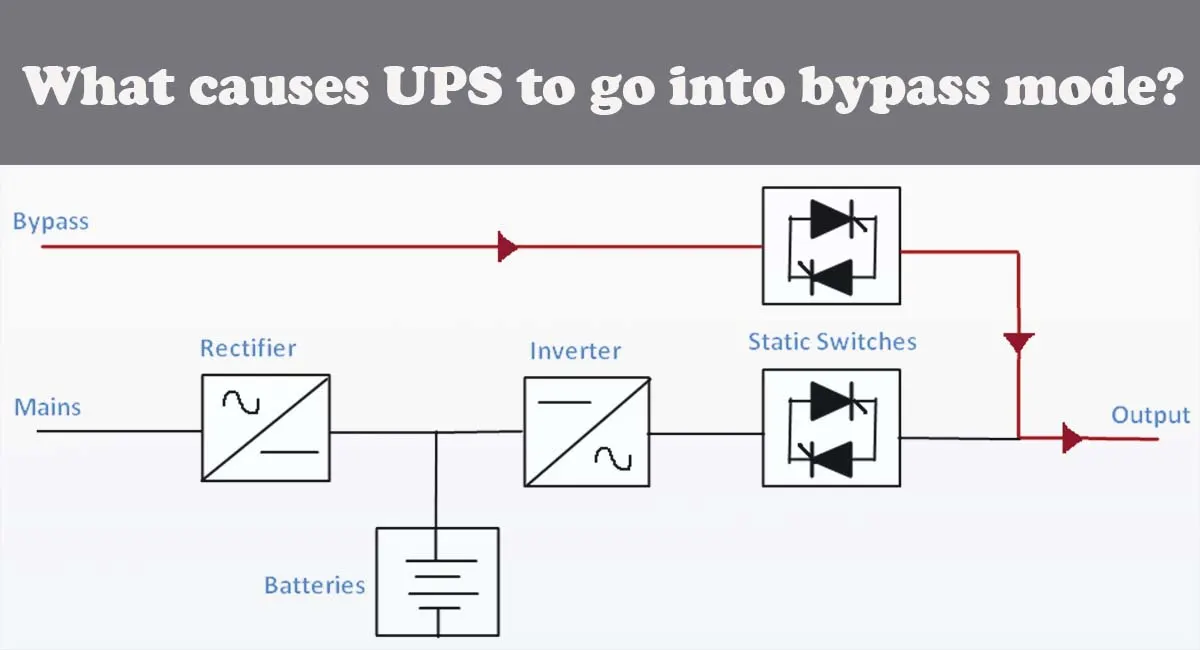
If the total power of the connected devices exceeds the capacity of the lithium UPS, the system will automatically switch to UPS bypass mode. For example, if 1kVA tower UPS is connected to a 3kW load, the UPS will switch to bypass mode. When the load device has short-circuit fault, the UPS inverter will also immediately shut down the output and switch to bypass mode. It can prevent the inverter from being damaged by instantaneous high currents. Some devices such as motors and transformers, which cause high inrush currents during startup, may also cause the UPS to switch to bypass mode when starting up. Additionally, if the load type is incompatible, the UPS will also switch to bypass mode.
Lithium UPS failures
If the UPS encounters an internal failure, it will switch to bypass mode. For example, if the inverter is unable to output voltage normally, the output voltage exceeds the permissible range, or it cannot work normally, the UPS will switch to bypass mode. When the internal temperature of the UPS exceeds the design threshold, the system will also switch to bypass mode to let the inverter cool down.
Input power issues
If there is a problem with the bypass input power source itself, the system will either reject it or send a warning immediately after the current enters. For example, the input voltage exceeds the range set for the lithium UPS, or the frequency is unstable during power supply.
Manual operation
During system maintenance or testing, operators can switch the UPS to bypass mode via the control panel or remotely. When servicing or inspecting the UPS system, you can switch to static bypass first, then close the external maintenance bypass switch to achieve online maintenance. Our rack mounted UPS is modular lithium UPS designed, can be expanded or replaced online.
External environmental factors
Excessively high equipment temperatures can trigger the temperature protection, causing the system to switch to bypass mode. The system may also switch to bypass mode unintentionally due to abnormal humidity levels or external electromagnetic interference.
What's the function of UPS bypass mode?
Ensuring business continuity
One of the key functions of Lithium UPS is to ensure equipment can continue operating even when unexpected issues arise with the mains power supply. However, if a failure occurs within the UPS and there is no UPS bypass mode, the equipment will shut down immediately. The UPS bypass mode is designed to overcome such sudden failures. When the system’s inverter, control board, or other components fail, the UPS bypass mode can switch power supply from the inverter to the mains in milliseconds time, ensuring critical equipment keeps running.
Enabling online maintenance
Lithium UPS systems require regular maintenance. Without UPS bypass mode, power must be interrupted during routine inspections and repairs. This means business operations must also be suspended. For critical applications such as trading systems and servers, even planned downtime can result in significant losses. The UPS bypass mode allows technicians to inspect, maintain, and replace UPS modules without interrupting power supply.
Improving system energy efficiency
Our rack-mounted and tower UPS feature ECO mode, which can boost efficiency to 97%–99%. It can help enterprises, offices, shopping malls, and other users improve energy efficiency and reduce electricity costs. ECO mode is a specialized application of UPS bypass mode. In ECO mode, the inverter remains in standby, while the bypass serves as the primary power supply route.
Providing a bypass path for equipment startup
Loads such as air conditioners and laboratory equipment draw high currents during startup. When the startup current of a load exceeds the capacity of the lithium UPS, bypass mode temporarily takes over the power supply, allowing the equipment to continue operating on mains power. This also prevents the inverter from being damaged. If the overload remains, the UPS typically remains in bypass mode and issues an alarm to inform maintenance personnel to address the issue.
Is it faulty when the UPS enters bypass mode?
Many people think that UPS bypass mode means the equipment is faulty. In fact, UPS entering bypass mode does not equal equipment failure.It may be the system’s self-protection mechanism. If you’re unsure whether UPS bypass mode results from equipment failure or normal operation, please contact us. Generally, switching the UPS to bypass mode manually is normal for routine equipment maintenance, system testing, or firmware updates. In these cases, you need not be concerned. It is also a normal state when the UPS is in ECO energy-saving mode.
Meanwhile, if the UPS automatically enters bypass mode, it could be due to the system’s self-protection mechanism or a device malfunction. When the inrush current of a connected device is too high or the ambient temperature is too hot, the UPS’s self-protection mechanism will cause the system to automatically switch to bypass mode. However, if you see a record of a manual switch to bypass mode in the event log, you should check for error codes. If the UPS has a fault, you will see a specific error code displayed on the UPS. In this case, you should contact the Lithium UPS manufacturer for repair.
Conclusion
UPS bypass mode is essential for ensuring connected equipment receives uninterrupted power supply. It is not one of the design features of lithium UPS, it is also the protection that guarantees the load will not lose power even when the UPS fails.